Category: Crossmopolinate Workshops

  • Postcards to Heidelberg

    Postcards to Heidelberg

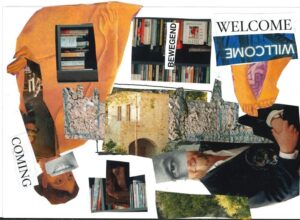
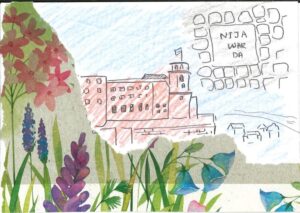
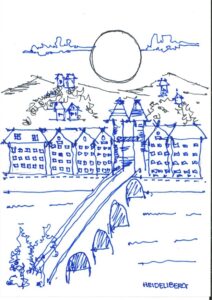
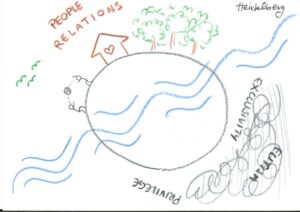
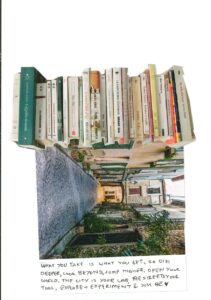
    As a warm-up exercise for the last day of the excursion, the participants were asked to reflect upon their experience of the city and compare this with the way the city presents itself. Certain iconic elements, such as the Old Bridge, the castle, and the Old City, prominently feature as representative symbols of Heidelberg. These visual symbols are readily observable and are frequently depicted in postcards available for purchase in souvenir shops situated along the main thoroughfare and even within the central train station. In contemplating the nature of postcards, we draw a parallel to Professor Sölch’s conceptual framework in as found in Heidelberg. As we began to delve into the question of how “the sensory perceptions of the material and physical aspects of a city relate to the aesthetic and social dimensions of everyday life,” we initiated an exploration of the defining characteristics of this urban landscape. We recognized that even seemingly mundane objects such as postcards can be considered instruments for projecting the desired image of the city. Postcards possess a unique quality in that they are specific to a particular location and are intended to be sent to recipients located beyond the city’s boundaries, serving as a bridge between the inner and outer realms of the place.

    In further examination, we pondered the intended audience for these postcards. It became evident that the local, regional, or even national aesthetic attributes of the old city are also profoundly influenced and shaped by the perspectives and expectations of global tourists regarding what constitutes a romantic medieval German city.

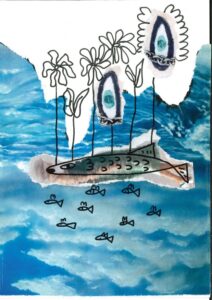
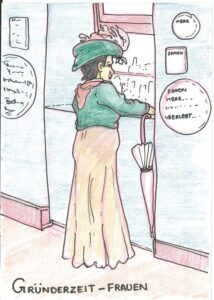
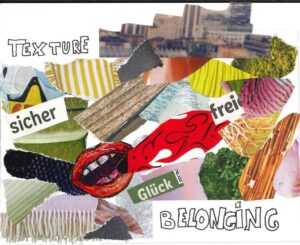
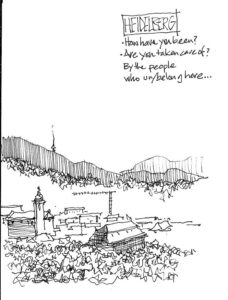
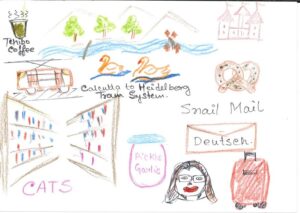
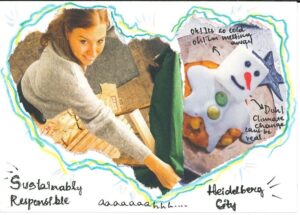
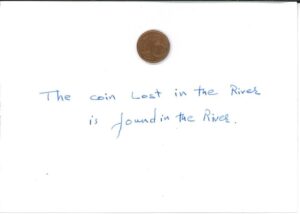
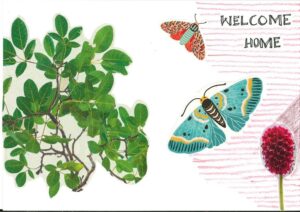
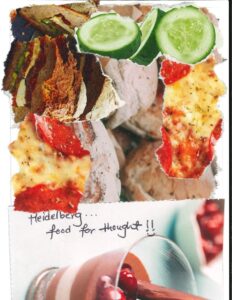
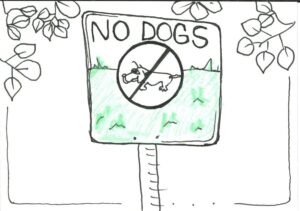
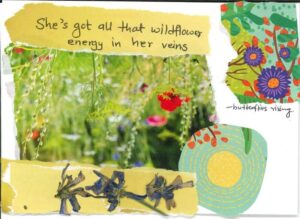
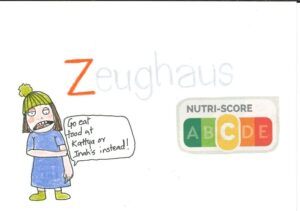
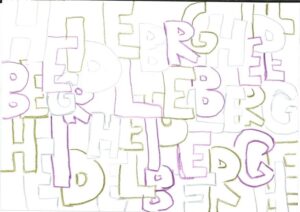
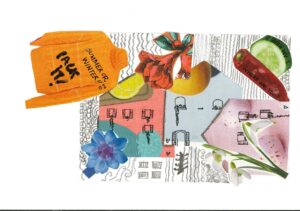
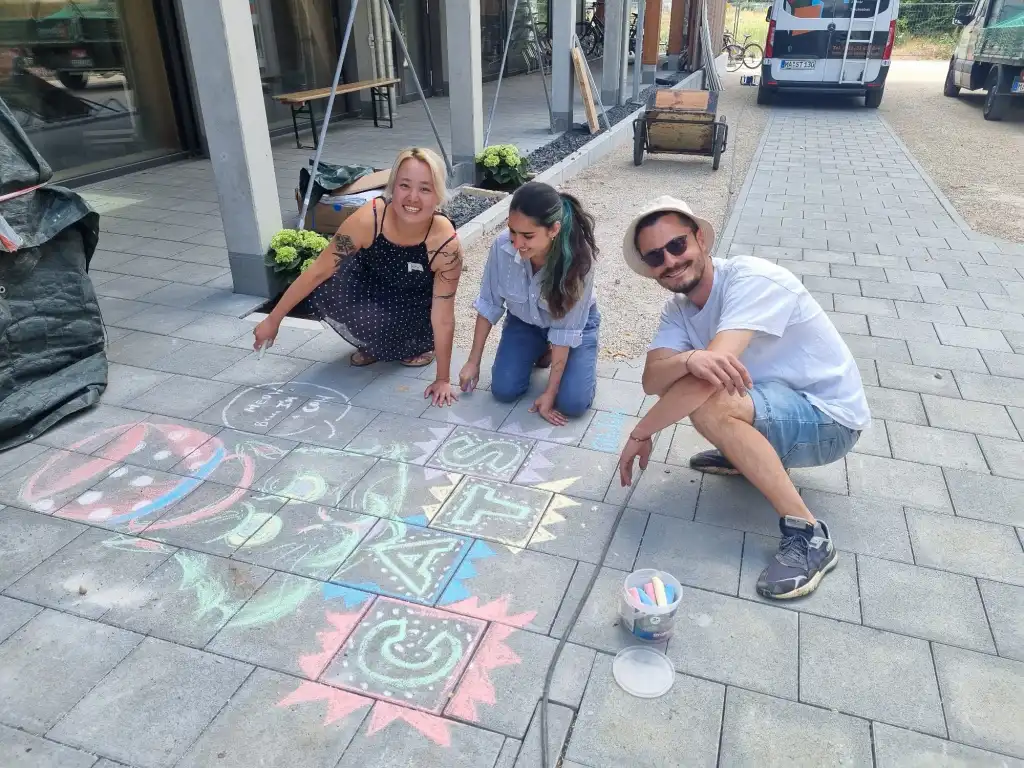
    During the postcard workshop organized by Crossmopollinate on the final day of our excursion, participants were tasked with creating postcards that subverted the conventional, romanticized representations of Heidelberg. This initiative encouraged us to actively contribute to the construction of diverse narratives about how a city is perceived and defined, and how previously overlooked aspects can be incorporated. Through the personalization of our postcards, we initiated this process by tapping into our individual perceptions of the city. Each participant articulated their unique responses to how they physically and emotionally experienced Heidelberg. For instance, Deepali, a student from SPA who accompanied us on the excursion, conveyed her sense of longing for chili and the diversity of vegetarian cuisine that was absent in Germany, as well as the challenge of packing both sweaters and t-shirts due to the unpredictable weather. Kattya, a resident of Heidelberg for approximately two years, incorporated a sign from a cafeteria into her postcard and added a small figure with the message “Go eat food at Kattya’s or Inah’s instead!” This reflected memories of cooking and enjoying better-tasting food together.

    Throughout these deliberations and conversations among the participants, our journey through Heidelberg took on a more introspective character. It unveiled the city’s multifaceted layers, both those readily apparent and those concealed, thereby offering a comprehensive, multi-dimensional perspective on urban experience and representation.

    To bring the sessions to a close, we discussed how the compiled glossary and discussions that arose in the process may be brought back into our respective urban spaces and what kind of projects could be envisioned through this. We explored questions such as: What do we know, and is our expertise sufficient? How can this knowledge be translated into action, activism, policy-making, and more context-specific practices? We also discussed how the compiled glossary and our discussions could be brought back to our individual urban environments, envisioning potential projects that could arise from this endeavor. A culmination of these questions lies in the Crossmopollinate Handbook of Urban Transformation. 
  • Workshop for Word Accumulation

    Workshop for Word Accumulation

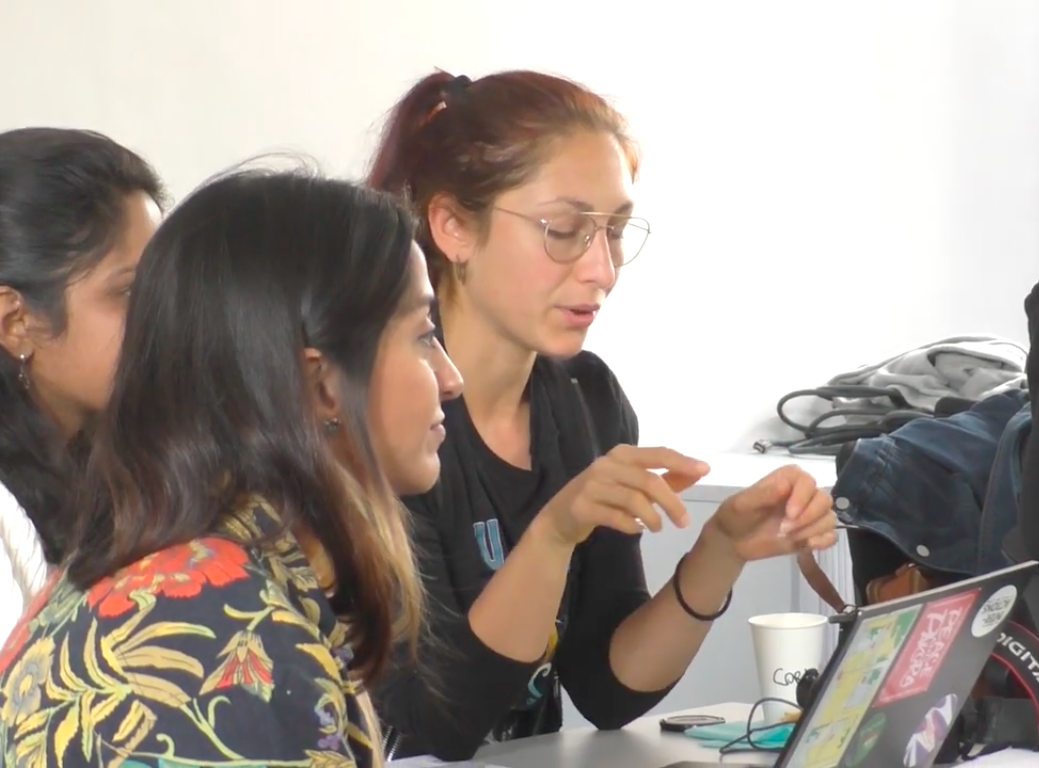
    For the three-part workshop series, the participants were invited to send in up to 3 words that they encountered in their respective fields of research and wished to collectively disambiguate. These words were submitted prior to the workshop via a Google form – we wrote these down into a total of 52 words on small slips of paper and placed them in a bag. The participants were then divided into groups of 5 and asked to pick and define 3 randomly chosen words from the pool of words every three minutes. They were asked to add multiple layers of semantics to the words drawing from their own contexts and disciplines. The keywords and ideas mentioned in these brief but insightful moments about each term were jotted down in the miro boards in the group work. 

    After the 4 sessions of rapid discussions on the definitions, we concluded with a group discussion, where participants questioned and defended the created definitions. They were then asked to think about the mode of communication, and how their group decided to create a collaborative definition. While some groups were more focused on creating a concrete sentence appropriate for a dictionary-like style, others were more engaged in guessing what the person could have had in mind while submitting the word in the first place. Certain terms, however, stayed specific, as their meanings and relevance. For instance, the term ‘Urban Village’ had a specific implication in urban planning and design, as its meaning is unanimous to addressing locations where their original establishment were agrarian communities and have transformed over time due to urbanization, and did not additively gain significance in its definition. However, it did find adjacent and relational words such as ‘urban margins.’ Other words such as ‘walking’ for example, highlighted more subjective experiences of moving through a city. It was by and large apparent in the conversations that the introduced words and terms were relativized with one another. 

  • Workshop Report: Extension of Crossmopollinate Glossary Workshop with Fine Art Students at Kathmandu University

    Workshop Report: Extension of Crossmopollinate Glossary Workshop with Fine Art Students at Kathmandu University

    The workshop was conducted by us (Inah and Kattya) founders of Crossmopollinate, in collaboration with Pranab Man Singh and Sagar Manandhar for the course Art Theory and Aesthetics X Studio Art. The workshop aimed to explore the intersection of transcultural studies, social art practice and urban transformation. This report provides an overview of the key discussions and activities conducted during the workshop, emphasizing the multidisciplinary glossary could be further expanded and worked upon.

    The workshop’s primary objective was to extend the glossary of Urban Transformation that accommodated the diverse academic backgrounds of participants, including anthropology, transcultural studies, art history, fine arts, and geography. This workshop was specifically done with students in Fine Arts, that deal with urbanity in Kathmandu through their artistic practice.

    To contextualize the workshop, we outlined the methodology employed in creating the glossary, emphasizing a collaborative, non-linear approach. Participants were tasked with contributing or extending the definitions of words from the Glossary of Urban Transformation, and subsequent discussions displayed a more comprehensive and an interconnected character. The glossary, hosted on the Obsidian platform, allowed for ongoing contributions, fostering a continually evolving repository of knowledge.

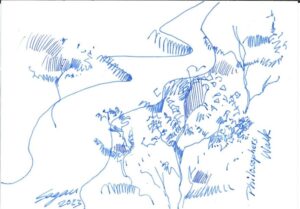
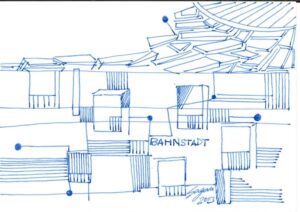
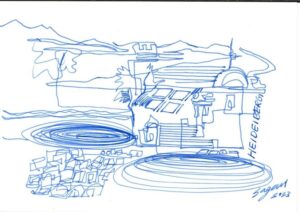
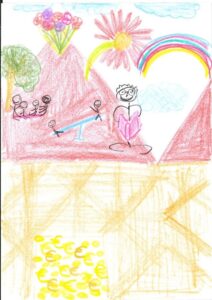
    Within the given time of 10 minutes, the participants engaged in defining their selected terms. The words each group resonated the most, when dealing with the urban space through their artistic practices were: empathy, time, mundane, centre and periphery, and initiative. Group discussions provided diverse perspectives, and the discourse extended to exploring the manifestation of these concepts within the urban landscape. Students were also encouraged by Pranab and Sagar to think about definitions visually, thereby producing sketches, illustrations and diagrams complimenting their experiences of the chosen words. 

    The working definitions was added on to the Obsidian platform, which serves as a dynamic repository for the evolving glossary. Participants were encouraged to contribute content, encompassing text, images, and videos. This collaborative space facilitated a collective understanding of transcultural concepts and their applications to urban transformation.

  • Workshop for Meaning-Mapping

    Workshop for Meaning-Mapping

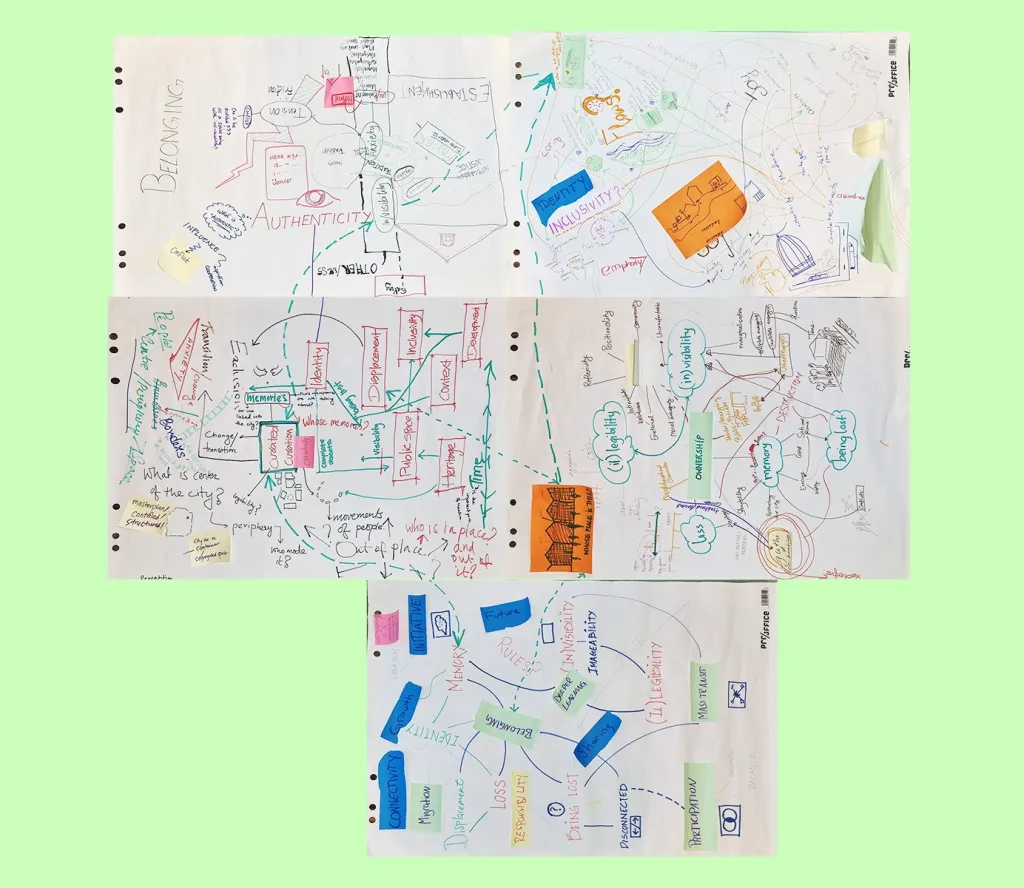
    The second workshop aimed to visualise how each defined of the terms was interconnected with one another, based on our sensed experiences while walking through the city for the last 3 days. Thus resulting in a complex web of meanings as opposed to a list when thinking about a glossary that better represents our perception and mode of being in an urban setting. Participants first received a manual prepared by Crossmopollinate, which contained a list of all the words and their definitions generated during the previous workshop. This manual served as a foundation for constructing the web.

    Using this list as a starting point, participants expanded the web by adding layers of signification through discussions related to the key themes of the Heidelberg excursion and their individual research interests relevant to Urban Transformation. To facilitate this visual representation, participants were provided with craft supplies such as paper charts, markers, glue, colored paper, and scissors. These tools allowed them to translate abstract concepts explored in the workshops and during the excursion into tangible visual elements within the space. As participants began to visualise these terms in their contexts, three-dimensional models emerged, adding spatial, temporal, and experiential meanings to terms and concepts. As the discussions proceeded, the terms began to be recontextualised within diverse lexical and geographical fields. For example, the term ‘knowledge’ in the context of these three cities, Heidelberg, Delhi, and Kathmandu, meant different things.
    In the context of Heidelberg, we engaged in the conversation concerning the city’s identity, particularly in light of its self-designation as a ‘knowledge pearl.’ Our discussion revolved around the mechanisms that have contributed to the political and economic contours of the city. It was apparent that the educational institutions and the demographic shifts associated with the influx of students and scholars were some of the most pivotal in the shaping of this university city. As we were considering other catalysts in how the city wishes to curate its own identity, the emphasis in wishing to appeal to itself as a romantic medieval city, seemed also to be a reactive maneuver in making itself attractive to the lens of the tourists. Other memory and knowledge-making were also in play through multiple smaller communities. This became more evident while revisiting the old city through the history of the brutality of the Nazi regime through a personal guided tour by a member of the Stumbling Stones (Stolpersteine, commemorative bronze plaques) committee on these counter-memorials, placed in between the streets of University Square and the streets in the former residential homes of the Jewish population.

    Participants were faced with questions such as, why do counter-memorials become impossible within the context of certain cityscapes, for example, the 2002 genocide or the 2019 Delhi Riots in India? Bringing them to another semantic layer of justice and reparations within the cityscape.

    Furthermore, in the context of Kathmandu, knowledge is loaded with the concepts of indigeneity and modernity, in a complementary relationship. 

    The mind maps were first created in the smaller groups that worked together in the first workshop, then emerged a larger map, collectively connecting the 5 groups’ maps. Connections were then made across these maps. In the course of our discussion, we explored how this multi-layered web of terms could connect to the participants’ personal experiences of urbanity, leading to the emergence of new words and concepts as connections were drawn.