Category: Interval Hashtag

  • #Mobility, #Hybridity, Kimchi and Me: Recipes for Tracing My Identity

    #Mobility, #Hybridity, Kimchi and Me: Recipes for Tracing My Identity

    #Labelling, #Normalization

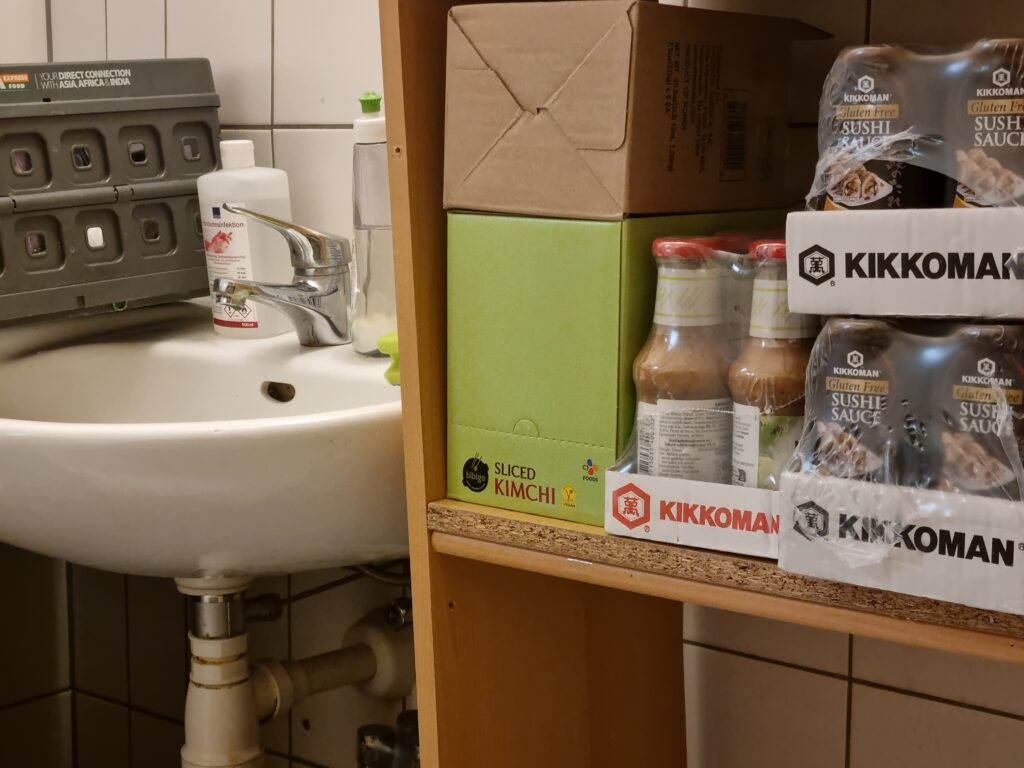
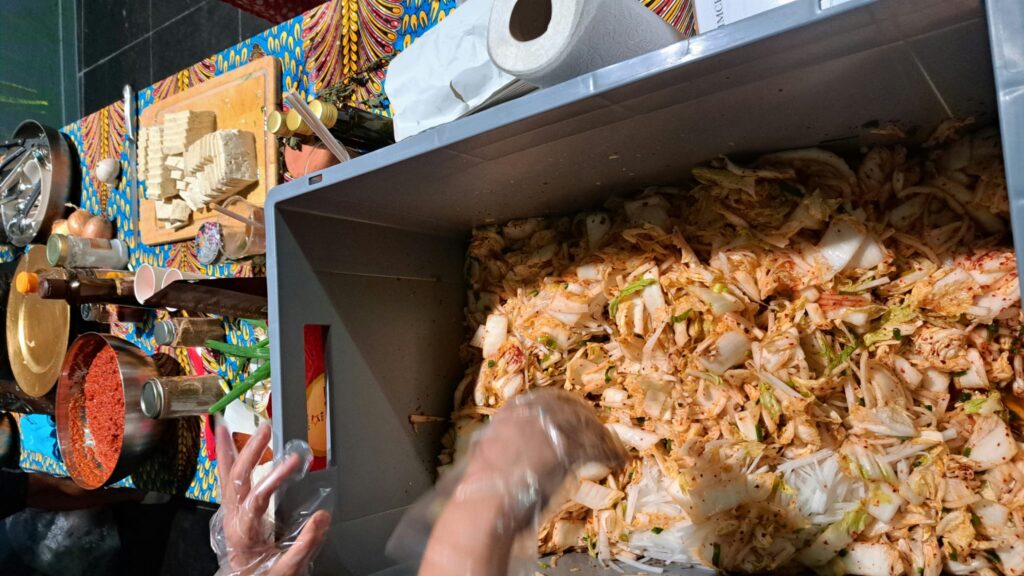
    Going up the stairs of Frankfurter Kunstverein, I was already led by the smell of garlic to the Mak Kimchi Workshop in the installation space of the artist couple La Caoba (Larry Bonćhaka and Sopo Kashakashvili). There were already about 10 participants gathering and chatting, with their containers to bring the kimchi home. I came to join alone, but I was relieved to find a friend and the guest host, Inah. The exhibition room had a greenhouse at the center, jute bags on the wall with signs of “TARIFFS”, “FREE WATER”, “DECOLONIZE FOOD”, and so on, wooden sticks and stones hung from the ceiling with ropes. The right front corner of the room was full of ingredients and cooking utensils. Every Saturday, the artists invite guests to participate in a cooking session that fosters transcontinental community-building. On the table were also Georgian spices from the previous session.  In this transcultural and cross-media space, I recollected the memory of the fridge in my family home in Osaka, Japan, which was also always filled with the smell of kimchi. 
    I remember this one day, when I was in elementary school, I had a friend come over. As soon as I opened the fridge to show her the drink options, she was surprised to find a container of homemade kimchi from my grandmother. To her surprise, I found out that home-made kimchi in the fridge was not ‘’normal’’ in my suburban neighborhood of Osaka. My grandmother would make kimchi with cabbage, radish, and cucumber, but my most favourite kimchi as a kid was with dried squid that my father would buy in Tsuruhashi district, a so-called “Korean town” located in the center of Osaka. Ever since this encounter, however, I have become hesitant to open the fridge in front of my friends. 

    My father was famous among my friends from kindergarten as a master of BBQ. While he made a fire in a Shichirin (small charcoal grill) in a workspace of his business which my grandfather built next to our house, I would go to our small garden, picked some lettuce that my grandmother grew, and helped my mother marinate the beef slices from a Korean butcher in Tsuruhashi with my father’s home-made BBQ sauce. We sometimes had steamed pork with Gochujang sauce on the same table, which I had recently learned is called Bossam. It was when my friend’s family came over to join the BBQ that I realized the red sauce would be too spicy for some of my friends.

    For the longest time, I didn’t know that these dishes were Korean, which my friends’ families would not cook. A Korean couple was visiting us occasionally, and I remember my parents telling me to say “Hi”. One day, I asked my mother who they were and learned that they were my relatives. 

    It was only later that my mother told me, “Your father had a Korean passport, too, but he decided to be naturalized after we married,”  which came as a shock, since for a decade of my life, I was thinking, “I am 100% Japanese.” 

    Why didn’t you tell me about that?

    Because your grandmother was worried. In old times, there were discriminations against Korean people, and there might still be…

    What she said immediately made me let go of the need to know why  no one had told me about the Korean side of my family, and until I entered university, nothing had made me feel comfortable enough to tell my friends about the Korean background of my family. 

    My grandfather had moved to Japan alone when he was nineteen. He met my grandmother, whose parents are Korean, in Okayama and then settled in Osaka. My grandmother cannot speak Korean, but she might understand a few words from K-dramas. My grandfather, however, could, according to my father. I always wonder if he would have taught Korean to my father and me if discrimination did not exist. Now that I love traveling to South Korea and watching K-dramas, sometimes I wish I could understand the language. I am not saying that it was wrong of them not to teach me Korean. Me not being able to speak Korean is a result of their care to protect me at that time and a gift for me to trace back their thoughts as I do in this essay.

    I did not inherit the Koreanness of my family by language, but by food.  During the New Year (Osyōgatsu) season, which the biggest holiday when many people spend time with their families and eat traditional cuisines, a popular conversation topic around this time in Japan is what kind of Ozōni (a soup with sticky rice cake to be served during the New Year holidays in Japan) each family eats at home. Some people make it with miso, some without. Others cook it with bean paste, depending on the region of the families’ origins. Every family had their own way of cooking it, but I didn’t know what Ozōni was, and I could not understand why it was a hot topic among friends. This was  when I realized my family traditions were not ‘’normal’’. I had never had Ozōni at home, but Tteokguk soup, a Korean soup with rice cake that is not as sticky as the Japanese ones. On the first day of January every year, we would place the dishes in front of our ancestors’ portraits, and bow to the floor for them before we started the holiday meal. This tradition, in Korea, is called Jesa, which would also be different from the Japanese way of celebrating New Year’s. Year by year, “What kind of Ozōni do you eat for New Year?’’ became an uncomfortable question to answer because of the abnormality. “If I tell my friends what we cook for New Year’s, they might find it weird”, I thought. I would just answer “miso,” which seemed to be the most common in my region. 

    Leading up to  New Year’s, and as the end of December approaches, my aunts come to my family home to help my grandmother prepare Chijimi (Korean pancake with leek), tempura (how she called it in a Japanese word. In Korean, Yukjeon), Namul (marinated veggies), and kimchi. My mother would put a Hello Kitty apron on me and always take me to the kitchen first to help the ladies. I asked, “How come my little brother doesn’t help us? He is still sleeping!” She answered, “Just let him sleep because he is a boy.” As I grew up, I became more and more sensitive about this difference in the gender role that was expected of me. As I found my family tradition different from my friends’, I started growing a little jealous about not having a “normal Japanese” New Year’s dishes with Ozōni and Osechi, a collection of dishes in a lacquer box that can just be ordered. 

    It was only after I started living in Germany that I began to truly appreciate my grandmother’s homemade kimchi. Having tried all the European groceries that I cannot find in Japan and started missing Asian food, I remembered that there was always a red kimchi container in the fridge at home in Osaka. I can easily get kimchi at shops like Go Asia or Rewe, but somehow, they are not satisfying enough. Living apart from my family could have been a chance to have my own “normal Japanese” fridge, one that I wished for as a child, to avoid being “different.” However, unlike Japan, where many people have only Japanese relatives, everyone in Germany has a different background. Having Korean relatives as a Japanese person would not come as a surprise to anyone. In Frankfurt, there are many Korean supermarkets; because of the large number of Korean companies, trendy bubble tea shops, and cafés with matcha latte, which are full of locals. This environment might have helped me realize my true identity that cannot be described only with the labels of “Japanese” or “Korean”. Although I once wished to have “normal Japanese” traditions as a kid, what I missed at home in Germany was not just a fridge full of Japanese ingredients, but a fridge with kimchi, one that is filled with garlic smell and Korean New Year dishes.

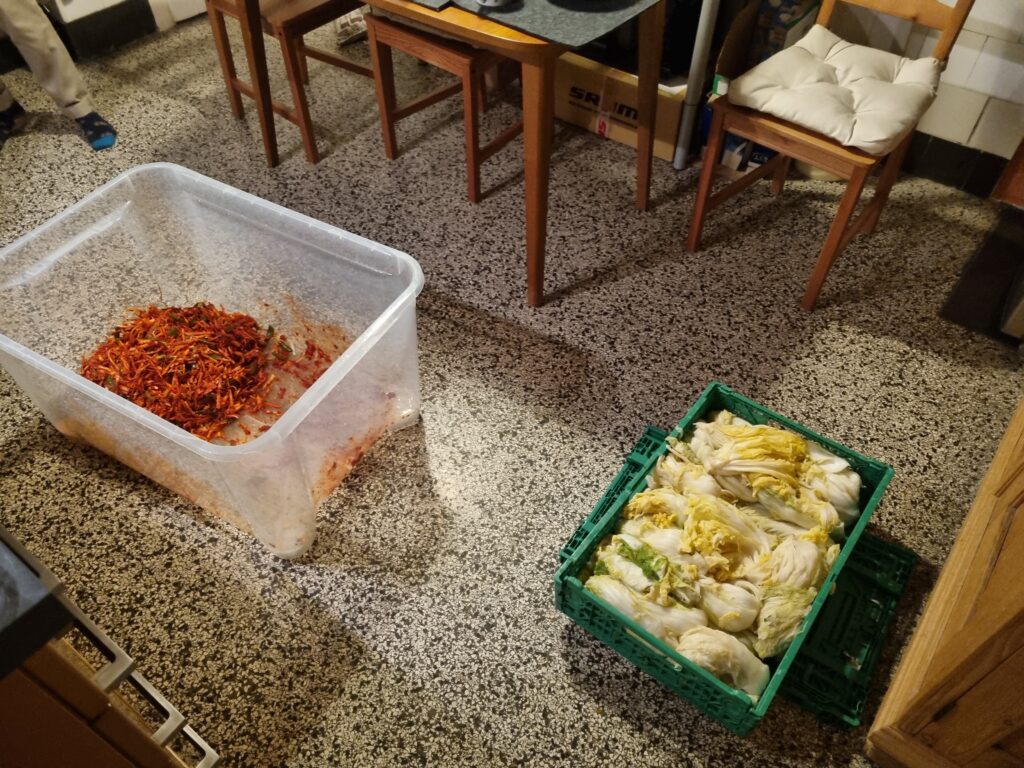
    Coming back to the workshop, it started with the introduction of the ingredients by the two guest hosts, a friend of mine from Heidelberg, Inah, and her friend Bora. They had already salted the cabbage in a huge bucket the day before. From their recipe, I thought it might be true that Korean cuisines in Japan have slightly been transformed over time. Watching them marinate cabbage with gloves and spread sesame oil in a pan, I felt like I was back home preparing New Year’s dishes with my aunties, mom, and grandma. I was grateful that the constellation of Korean recipes that was descended to me by women back home was reconnected to me in Germany through these women.
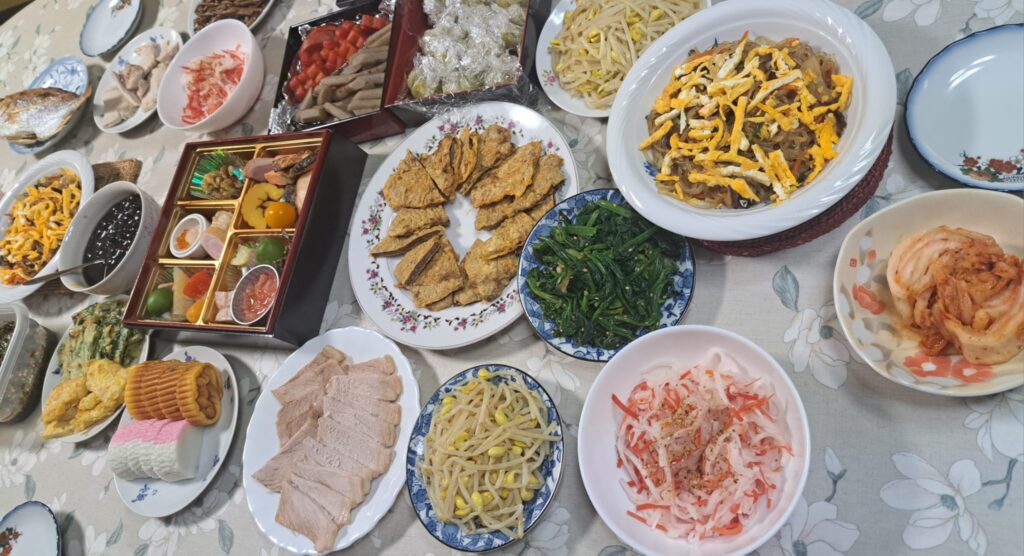
    On the table were onions, green onions, fruits, sticky rice, sesame oil, seaweeds, and kilograms of Gochugaru (red pepper powder). As soon as I saw this table full of ingredients, I began thinking that how my grandmother makes kimchi might be simpler than how it is usually made in Korea. In Japan, some Zainichi (descendants of Koreans who forcibly or voluntarily migrated to Japan during WWII and Japan’s colonization of Korea from 1910 to 1945) restaurant owners or chefs on YouTube promote a “taste of Zainichi Korean” Because every Zainichi Korean has a different background and associations with Korea, I did not like how they automatically categorize my grandmother’s taste. I don’t even know if my grandparents on my father’s side should be categorized as “Zainichi” or if they want to be. My grandmother’s dishes have more gentle and milder flavors than the Korean dishes I eat outside of home. When I sent the photo of the table to my father. He replied, “Grandma doesn’t put in that many ingredients. It’s much easier!🙂.” 

    If I come to think about it, I didn’t know if my New Year’s dishes were really Korean style or my grandmother’s style. On January 1, 2025, I spent New Year’s holidays in my 19-square-meter apartment in Frankfurt. I found myself googling how to make Tteokguk and getting the rice cakes at Go Asia in Zeil at Hauptwache. I helped my grandmother cook some Korean dishes for the New Year, but I had never helped her make Tteokguk. She would start by making chicken broth, and put egg, rice cakes, tofu, and when serving, add seaweeds and soy sauce with green onions. For some reason, I could not find the recipe with chicken. I just made it with beef as the recipe written by the Korean poster, because I was not sure if Korean people really eat this soup for the New Year, anyway. After a week, I met a Korean friend who showed me a photo of Tteokguk that she had made. It was the first proof I had that Tteokguk is really made outside my family. Interestingly, she had never heard of a Tteokguk with chicken. Again, I wondered whether my grandmother’s recipes differ from what is eaten in Korea today.

    When I cook what my grandmother cooked, I feel like I am decolonizing all the background history, which eventually prevented me from speaking about my family tradition with pride. If it was because of the discrimination against Koreans and Zainichi Korean people, which made my grandparents obscure their Korean identities, my act of learning Korean culture is for me, the act of recovering the unspoken part of my family history. What I can do is try to reassemble the Korean culture that my grandparents might have passed down to my family if they had not been pressured to conceal their identities.
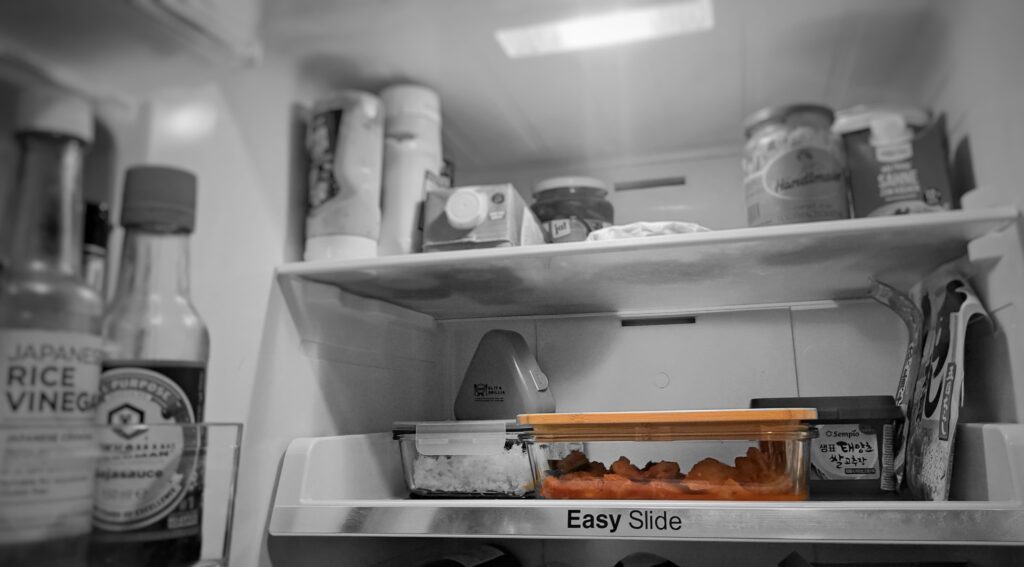
    After the workshop, the entire gallery smelled of kimchi, from the basement to the third floor. When leaving the building, I felt proud that it was filled with the comforting smell of my family’s fridge. Of course, after the workshop, the fridge in my apartment in Frankfurt smelled of garlic like my family’s fridge, and I felt a sense of pride in my homemade kimchi.
  • #Identity, #Mobility, #Asymmetry: “Spice is Relative”

    #Identity, #Mobility, #Asymmetry: “Spice is Relative”

    While preparing to move from my tiny, shared 9-square-meter room to a significantly larger apartment to live with my boyfriend, I was confronted once again with two large white plastic boxes I had nearly forgotten in the cellar. They were filled with the most random assortment of dried vegetables, grains, and flours—ingredients I had hoarded over at least five years during trips to Korea and visits to Asian supermarkets across Germany. The containers had been shoved into a corner of the basement, and I’d never had the chance to go through them during the rush of previous moves. I decided not to sort them in the cramped space I was leaving but to wait until I arrived in the new, more spacious apartment.

    After the move, which took nearly two weeks, I finally unpacked and began sorting through the contents. Many of the powders, like mung bean starch or dried gondeure (dried thistle), had expired. I asked friends and my boyfriend whether I should throw them away. Their consensus was, “It’s fine. Those things don’t really go bad.” So I kept them, hoping they’d find their way into something, someday.

    With a friend visiting from Lausanne—someone I’d worked with at a Vietnamese restaurant in Mainz—I felt motivated to make kimchi. I trusted her knife skills and knew she wouldn’t be overwhelmed by the sheer amount of garlic we’d peel or the precision required to julienne carrots and daikon radish. Occasionally, she’d give me 10 kilograms of kimchi whenever I visited her, especially once she discovered I had none in my refrigerator. I remembered the 1kg packet of gochugaru (Korean chili powder) buried in the pile of things I couldn’t bring myself to discard. I suggested we make kimchi as our weekend project in Heidelberg. That’s all we needed: garlic, gochugaru, sticky rice powder, apples, pears, onions, a lot of salt, fish sauce, and napa (Chinese) cabbage.
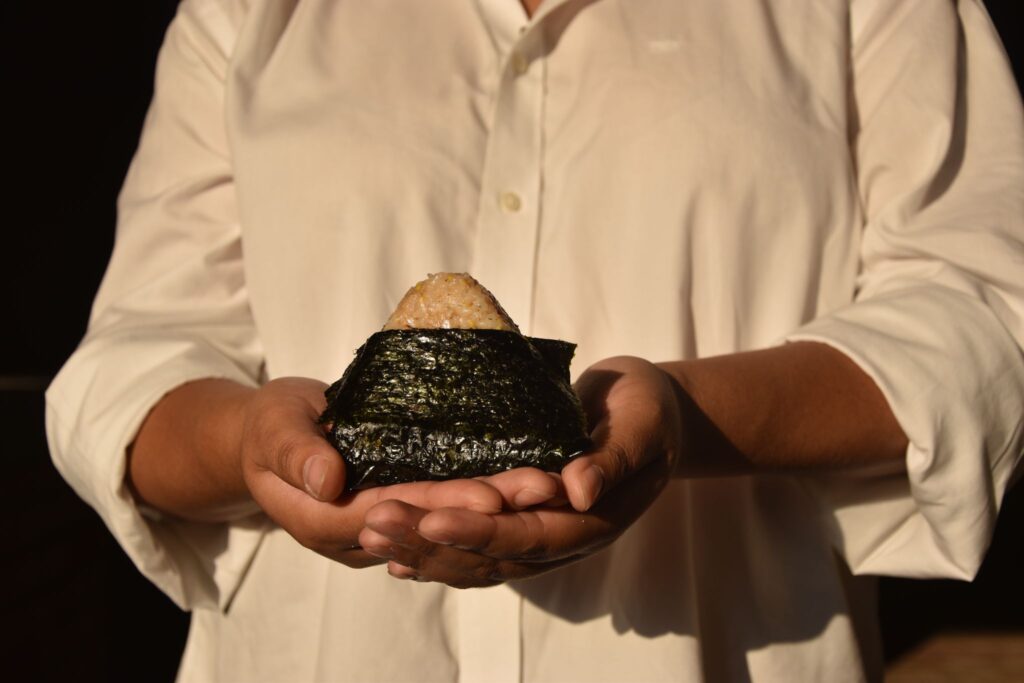
    It was late November, when the winds had grown cool and heavy cabbages appeared neatly stacked in supermarkets and markets. Not to question their presence, but I always wonder who in Germany cooks with that much cabbage—and for what? For me, the purpose was obvious. I’d haul back around ten of them, hoping each weighed at least two kilograms. Cabbages are harvested earlier in Germany than in Korea, and I used to be surprised by their smaller size. I’d grown up with ones that weighed five or six kilograms. Now I was simply glad if they weren’t hollow or dried in the middle, and weighed more than 1.8 kilograms. In Korean, we call sturdy, full vegetables like these silhada (실하다). Seeing one at the right time of year would immediately make me think of kimchi. But in Germany, I’d never seen a silhan (실한) cabbage. A woman from the Korean-German Christian community once told me you have to ask local farmers to harvest them late if you want cabbage suitable for Korean standards.

    The night before we began, we salted 20 kilograms of cabbage in a large plastic container placed over the bathtub. By morning, the cabbages had released much of their water and shrunk. We made the filling—called “sok (속)” in Korean, which translates to “the inside”—by mixing sticky rice powder with water, then adding pureed onion, apple, pear, and shrimp paste. When I opened the gochugaru packet to mix it in, I discovered that the chili powder had hardened and was covered in white mold. It was Sunday, and the only Korean acquaintance I could message in Heidelberg wasn’t home. We didn’t know what to do.

    Coincidentally, I was set to start a job at the local Asian supermarket the next day. My friend suggested I just pick up 2 kg of fresh chili powder after work, and we’d finish the batch then. There was no other option. Still, we enjoyed the salted cabbage leaves with suyuk (boiled pork belly) and raw garlic—something we rarely let ourselves indulge in, knowing how the garlic smell would linger for days.

    There are moments of doubt I carry with me, especially around smell. It might be a kind of habitual obsession that makes me worry about how I smell to other people. Living in Heidelberg among international friends—and in the wake of COVID-era stories of heightened anti-Asian racism—I’ve come to recognize that smell can be racialized. I spent part of middle school in Texas, where racist comments were common, and I didn’t yet have the vocabulary to respond. I recall the confusing embarrassment of offering kimchi to classmates, only to watch them recoil in overacted teenage disgust. Friends in Heidelberg often told me not to overthink it. Still, in the thrill of being halfway done with our kimchi—kimjang (김장), the process of making kimchi—I let myself eat as much garlic as I wanted. Before bed, my boyfriend, who’s not at all sensitive to the smell, told me I was “fuming with garlic.”

    On my first day at the supermarket, I assumed people would be more forgiving—after all, it was an Asian grocery. But even there, I was met with comments. A former Thai chef colleague told me he couldn’t stand next to me. Another colleague tried to reassure me, but, standing two meters away, still asked, “What did you do that you smell so much like garlic?” I told them I had made kimchi the day before. And so I became, instantly, the Korean girl who makes kimchi—and reeks of garlic—on her first day of work.

    Kimchi came up often in dialogues at the store. One colleague, who turned out to be a picky eater, told me she couldn’t stand the taste or smell of it. Yet one of her regular duties was to pierce expanded kimchi bags—on the verge of exploding from fermentation—and reseal them. Every time she did, she’d squeal, rush to open all the doors, and complain loudly. I understood the reaction, but still, it stung. I felt embarrassed, as if I were the kimchi.
    Answering questions about kimchi also became part of the job. It was surprising how much shelf space it took—entire aisles of jars, cans, and refrigerated sections. Over the four months I worked there, I developed a repertoire of responses. The most common question was about spiciness. The first time, a young boy asked how spicy it was. I reflexively said, “Spice is relative. So I don’t know how spicy it could be for you.” I regretted my snappy answer to such simple curiosity coming from a child. Over time, I realized that within the setting of an Asian supermarket, I was positioned not as someone being interrogated, but as someone expected to answer. These weren’t naive or racially charged questions—they were just questions. Sometimes, yes, drunk men would make inappropriate comments. But more often, it was genuine interest.

    It was strange to confront how popular kimchi had become, elevated by social media to the status of a superfood. Some customers were looking to boost their probiotic intake. I eventually decided I was fine taking the time to explain what it is. After all, I was being paid to do so. But it’s not easy: describing the spice level, the consistency, the cultural meaning of a food that, for me, is simply everyday. Maybe answering those questions with such repetition required a level of dissociation, where it became easier as I gathered a larger pool of automated answers based on what people expected to hear.

    That tactic of dissociation became useless when I was occasionally struck by the on-and-off grief of losing my grandma, who had passed away in the summer. I would sit down in the small office/storage room to eat my lunch and see 30g kimchi packages stacked on top of each other. It looked like a graveyard of kimchi, bereft of its soul. One day, answering questions based on cultural curiosity became especially hard when suddenly my phone was ringing with messages from friends in Korea. On December 3rd, 2024, I panicked upon hearing the news that the (now former) president Yoon had declared martial law. I quietly called three friends to ask what was going on—whether there was a war, or if this was the beginning of a dictatorship. Ridden with anxiety that I might not be able to see my friends or family again, I told my co-worker, “The president just declared martial law.” His response: “What? Keep working.”

    That entire day, while the military rushed into parliament and my friends kept each other updated, I tried my best to just stay in the store and act like I was working. By the evening, it had concluded that the worst-case scenario could be stopped. When the store owner stopped by to drop off boxes, I told him what had happened. He replied, “Oh, these things happen all the time in those kinds of countries.”

    I don’t know what kind of response I was expecting. Sometimes it feels like people practice certain reactions so often that when they’re faced with something unfamiliar, their response comes off as ignorant, unempathetic, or simply uncaring. I still don’t know what to make of these reactions, except to say that some emotions are not shared, perhaps because of cultural prejudice. Maybe these kinds of unsympathetic responses are also rehearsed and accepted elsewhere, but I can only guess.

    About three months after our kimjang, my neighbor from across the courtyard introduced himself. He asked what I did—and quickly followed up: “Did you make kimchi a few months ago?” He said he’d like to try it, but all he had to offer in return was bolognese.

    It still surprises me how many interactions leave me unsure of how to respond. I left that conversation with a chuckle, feeling both watched and uncomfortable, suddenly highly visible—called out for doing something unusual in Germany. Eating what I eat, making food for myself while worrying about the smell—these have become part of a routine I hardly notice anymore. I’m trying to unlearn these quietly depressing habits. I feel disappointed in myself for having assimilated too much, for not holding on to what I needed to protect in order to be myself. Relearning how to trust what my senses tell me to eat, smell, and feel is part of the process of trying to feel safe—and at home—in this country, where I’ve now lived for nine years.

  • #postcoloniality: Insert Hot Take: Ted Lasso, Masculinity, and Cultural Cachet

    #postcoloniality: Insert Hot Take: Ted Lasso, Masculinity, and Cultural Cachet

    Spice tolerance isn’t about taste—it’s a hidden language of identity, authenticity, and privilege. Who decides what’s hot, who gets burned?

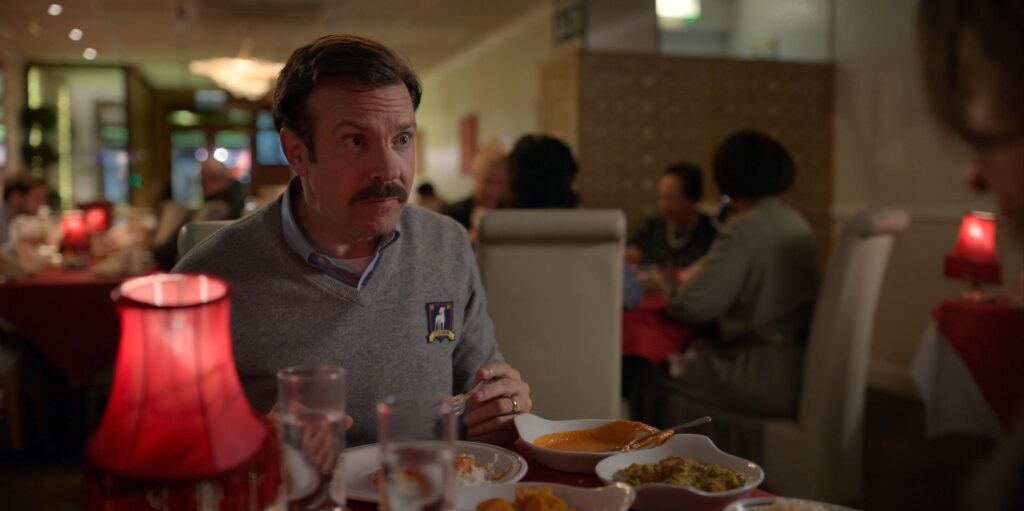
    Ted Lasso. 2020. “Trent Crimm: The Independent” Season 1, Episode 3. Apple TV+. Screenshot by author.

    The third episode of Ted Lasso has the titular character being shadowed by Trent Crimm, the sceptical reporter from The Independent. That night Ted was invited to a family owned Indian restaurant by his former taxi driver. Ted Lasso is out of place not only as a white man in an Indian restaurant but also an American, from Kansas no less, who is wholly unfamiliar with the cuisine. He makes the unwise decision of asking the food to be prepared like “they are a couple members of the family.” The food arrives and neither can handle the spice. Ted soldiers on, not wanting to upset those who invited him.

    It is this interaction that finally melts Crimm’s otherwise icy attitude towards Ted. 

    An AppleTV+ original, the show Ted Lasso is engineered to showcase men being soft, supportive, and most of all safe. What can be safer than a white man willing to ‘torture’ himself with spice? The episode ends with Ted getting the shits and rushing home. How, and why, does this signal safety? What inferences are we drawing from spice tolerance? Where does spice sit at the intersection of gender, race and online culture wars?

    Your spice tolerance is a significant social signifier; through understanding perceptions of spice tolerance, we gain insight into shifting webs of relationships between identities, like race, gender, and politics1

    We look at how spice has come to represent the Indian community globally, how spice is treated within the Indian community, how expectations of spice tolerance falls along gendered notions of strength, and discuss the transcultural implications of observing historic injustice and how trends skewer truth. 

    Spice as Signifier

    Cultures in the global North with significant Indian communities have synonymized spice and  “Indianness”.

    Stand-up comedian Hasan Minhaj’s appearance on the YouTube talkshow Hot Ones begins with the question, “How are you with hot food?” Minhaj responds, “As an Indian, I’m pretty good.”

    “Do you feel the pressure of your people on your shoulders? And you really need to come correct?”, the host adds.

    Proliferation of identity-based language has created a slew of terms to describe every intersection between “white” and “Indian” culture: American born confused desi (ABCD), fresh off the boats (FOB), coconut, firangi. An ABCD must outdo a white American in spice tolerance, but they, in turn, should be outdone by a FOB, who should then be trumped by any “real” middle-class Indian2.

    On the show, failure to complete the wings results in induction into the Wall of Shame. For Minhaj it would imply he was less of a man and less of an Indian. 

    It would surprise very few that this perception is no accident. Spice tolerance has evolved into a complex signifier of cultural authenticity, identity, and social dynamics, reflecting deeper issues of identity and belonging in a world increasingly obsessed with authenticity.

    Spice as a signifier brings with it deeply embedded structures of caste. Ragini Kashyap notes, in the paper “Caste: The Main Character of Indian Food,” “Today, the perception of Indian cuisine is primarily that of an upper-caste cuisine. It is ironic that approximately a quarter of all Indians are unlikely to ever have access to this food which restaurants around the world serve in abundance.” Going on to highlight, “[d]espite boasting a staggering diversity of highly developed cuisines, this division is, incredibly, one of the few constant features of Indian food along the length and breadth of the country. The ghee-laden curries enhanced with elaborate spice mixtures are primarily the prerogative of the upper-castes, while the curries of the lower castes are often simpler counterparts that maximise available ingredients.”

    Failure to eat rakti3, dish more common among the Dalit population of India, or axone4, popular among North-East Indians, would make no one feel less Indian. Yet, spice remains the foremost mark of Indian cuisine— a dynamic created by a hierarchy in which historically privileged Indians alone imagine what constitutes Indian.

    Having your Curry and eating it too

    Under the guise of combating colonial structures, the Indian diaspora continues to spread ideas about food that draw directly from Manusmriti5. Often, it is the same people pushing for more inclusive language and conversations in Europe and America who are complicit in India’s backslide on social issues.

    In a 2020 survey, the Carnegie Endowment for International Peace, found that “Indian Americans’ policy views are more liberal on issues affecting the United States and more conservative on issues affecting India. Regarding contentious issues such as the equal protection of religious minorities, immigration, and affirmative action, Indian Americans hold relatively more conservative views of Indian policies than of U.S. policies.”

    Narratives of food shape imaginations of India abroad and at home. The most prominent dishes—biryani, tikka, gravies rich in whole spices and expensive oils—allude to India’s monarchical history, where these dishes were prepared through significant labour by marginalised castes and women.

    Proponents attempt to claim Indian cuisine as an exemplary model of communal sharing and strong communities, unlike the isolated communities in ‘Western’ countries. They neglect to mention the underlying caste dynamics and the prevalence of the two-tumbler system, both within and beyond India.

    This foray into food implies a greater tension within a global Indian identity: keen to partake in the economic spoils of liberal democracy, granted by cultures tentatively re-evaluating their colonial histories, while continuing to stifle similar introspection within India. 

    Conclusion

    It is hard to avoid patriarchy. Even in efforts to reimagine masculinity, its ideals often persist. Ted Lasso is, of course, a fantastic and aspirational model of masculinity—encouraging, empathetic, and kind. Yet, he must be hyper-competent. Something which extends to most characters on the show. They must be able to effortlessly score a free kick if they set their minds to it, create secret, successful, football tactics, and defy age for a final hurrah. If they were unable to—if Ted couldn’t handle the spice, unable to come correct—we might feel shame on their behalf.

    This is okay. Apple TV+ should keep attempting to reimagine masculinity, we must keep attempting to avoid patriarchy. The show’s use of spice served for us only to be a jumping off point for a rabbit hole into the transculturality of spice. 

    This rabbit hole, unfortunately, ends where most do; at the bottom is historic marginalisation, enduring oppression, and capitalism. A reading of the text so far may leave you with a simple narrative. Upper caste, privileged, men perpetuate within Indian communities, at home and abroad, patriarchal notions of spice tolerance and gate-keep away women and minorities through subtle but persuasive ridicule. We should and must resist the urge to perpetuate this paradigm. Good praxis is to accept people for the spice tolerance they have, not pressure or push people and to live and let live. 

    But there exists some dissonance here. I love spice. I was made to love spice. By friends who pushed me to eat spicier and spicier food, at times directly playing on masculine insecurity. It worked – I loved it. I cherish a biriyani that can clear my sinuses and numb me. When living outside India I freely used my spice tolerance as cultural cachet to bond and talk to those from other cultures. I am perhaps just as tacitly guilty as the Indian diaspora I bemoan.

    It has been easy to be cripplied by the sense that all explorations of culture and its origins must result in some newfound disapproval. This is a failing and is avoided by simply being encouraging, empathetic to oneself. We can, and should, continue to think about the transformative, challenging and mundane effect of cultures, and their histories, on our lives without turning to despair. Understanding histories should not lead to guilt that creates shame, shame which creates secrecy. We shouldn’t be afraid to make things spicy.

    1. In “The spicy spectacular: food, gender, and celebrity on Hot Ones,” Emily J.H. Contois of University of Tulsa looks at how the show “creates, maintains, and manipulates inequitable gender hierarchies through the interrelated performances of gender, food consumption, and celebrity.” It specifically looks at the “cool girl” trope as it emerges in the show. Citing the example of Padma Lakshmi, a woman of Indian origin, whose episode is titled, “Padma Lakshmi Gracefully Destroys Spicy Wings.” 
      https://emilycontois.com/wp-content/uploads/2020/07/contois_spicyspectacular.pdf ↩︎
    2. Middle-class as commonly used, not statistically. ↩︎
    3. Meat cooked with pig or goat blood. Recipe link. ↩︎
    4. Fermented soybean dish with a strong smell. ↩︎
    5. Ancient Hindu “legal” text which codified caste and gender hierarchies, further reading: How to Look at Manusmriti and the Caste System, Devdutt Pattanaik ↩︎
  • #Transit:Fragments of Home Between Santiniketan and Heidelberg

    #Transit:Fragments of Home Between Santiniketan and Heidelberg

    This is just one version of my story as an international student—shaped by the day, the place, and the state of my heart. I wrote this while I was still in Heidelberg, holding what I could at the time. Some memories return vivid and raw, others blurred at the edges. This is Part one of a journey still unfolding—messy and in transit.

    Universitätsplatz, Heidelberg (photographed by author)

    Studying abroad has enriched me in countless ways, but there were more days when it felt like I was trapped in a nightmare for a month straight. Navigating through the emotional and bureaucratic complexities of life, mostly alone, in a foreign land that has left a mark I’ll carry with both pride and ache. Back home in India, it’s common to see young people move cities for better opportunities. But for someone who had never lived away from her parents for twenty-five years and struggled with deep-rooted self-esteem issues, I never imagined I’d cross continents to pursue a second master’s degree.

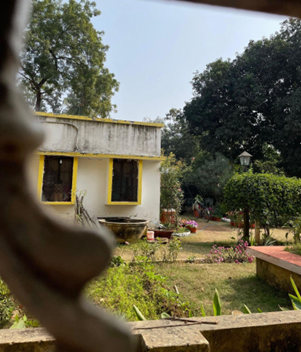
    Purbapally, Santiniketan

    In the first eight months, I moved through at least five private apartments before finally securing student accommodation on the outskirts of Heidelberg. Yet, no matter where I lived, I invariably woke up to the aroma of brewing coffee drifting in from shared kitchens, while gazing out at the changing hues of European nature through the curtainless, old wooden windows. It was a stark contrast to the familiar scent of incense sticks, the pressure cooker hissing, and the fresh smell of rice cooking every morning in my house in Santiniketan[1]. That contrast, in itself, spoke volumes about how far I had come, literally. Santiniketan, with its red soil, open skies, and the lingering echoes of Tagore’s music[2], was home. And yet, here I was; trying to ground myself on Heidelberg’s cobbled Hauptstrasse, walking into one of the oldest universities in the world.

    As I write, I realise that experiencing Heidelberg hasn’t been just about the picturesque landscapes and academic rigor in a historic university town. It’s been a journey through dynamic shared experiences. I met students from Pakistan, Portugal, Ukraine, Colombia, Hong Kong, Afghanistan, Iran, Turkey, Senegal, Nepal, from several states of India, and of course Germany, with whom I shared a sense of collectiveness in memory and identity that resonated with the flowing idea of home and the longing to belong with the foreignness. Our memories of home often arose from a (deprived) hope of returning, or sometimes from the deep desire to belong to a place that can be felt as a home. We yearned for a sense of normalcy, driven to find parts of ourselves in the pubs and canteens of Heidelberg. In all those moments, I knew that the nature of the pain and fear stemming from the dichotomy of uprootedness and embeddedness transcends borders and nationalities.

    It wasn’t all sad, of course! In Heidelberg I felt the magic spell that togetherness casts on you and the virtue of living for each other that one doesn’t forget. I experienced the ecstasy of growing up while making connections that embraced my vulnerabilities. For example, the 7 minutes walk everyday from the Eichendorffplatz tram stop to the student campus always felt like 7 years, with my shoulders drooping down with every step, scavenging for the reason that made existence so heavy those days. Those times I was often saved by simple meals that my friends shared with me. The Western dream to polish and shine through life was nowhere to be seen, but familiar voices and conversations over meals did the magic, every time!

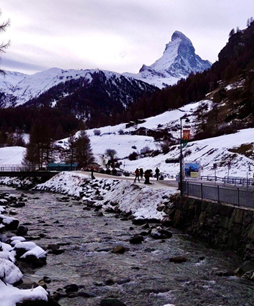
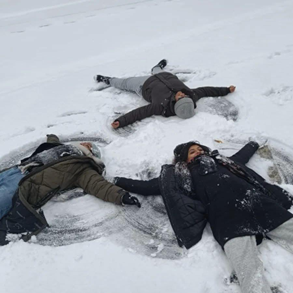
    Through havoc trials and errors of finding a firm ground for my emotional self, at every uncertain step, through every struggle of letting go of something, I only found more love wrapped up and sent to me in different packages. My uncle lives in Zurich with his family. We lived in a joint family together in my birth city in India for the first seven years of my life and reuniting with him in Europe felt surreal. I found a photograph that I added on Facebook, expressing my complete disbelief and gratitude for experiencing the Alps in Zermatt, Switzerland! That day I promised to build more of myself in the present, keeping in my heart the experiences of the past that shaped the path leading me to the present. As I scrolled through my Facebook feed further down, there was also this photo of me, bundled up in layers, marveling at the first snowfall of my life, it was freezing and I was surprised how spontaneously I went out, gathered my friends and made snow butterflies at 7
    a.m. We spent at least five hours dancing and jumping in the snow forgetting all about the flu we suffered just a week ago, a visual memory that still makes me hum, “And I think to myself. What a wonderful world!”

    Re-reading social media posts feels a lot like looking at an old mirror that I hated looking through when I had first arrived in Heidelberg. I hated how my friends enjoyed home-cooked meals every day, (affordable) Uber selfies, varieties of indian cuisine delivered at doorsteps; made me so jealous that I cherished every moment a lot more to compensate, because it did feel a bit criminal to not marvel at the snow-capped cherries or the buildings that looked straight out of a Miyazaki[3] movie. Yet, I didn’t know where to place the strange, deep loneliness that lingered like an unavoidable shadow, always close, always present.

    Undeniably, as my medical anthropology studies unfolded, I have been increasingly drawn to the narratives of suffering and resilience more than ever. As someone who always wondered about the facets that make up one’s mental health, I kept searching for evidence of how pain and endurance connect us across cultures, even as our stories remain deeply personal. Stories of people caught between “here” and “there,” shaping new identities by reusing fragments of an old self, much like mine. Numerous encounters, both in class and beyond, helped me begin to view my own struggles with depression differently. Recognizing the profound influence of cultural context on our experiences allowed me to gradually deconstruct my own biases around mental health. Over time, I’ve learned a few ways to hold my pain with more compassion and less judgment, better understanding of how deeply our inner worlds are shaped by where we come from.

    Although I came to Germany by choice, it felt like an exilic torture to be disconnected from my cultural identity and community, away from my lifelong comfort, security, relationships, and privileges back in India, which was not my choice. However, in this chapter of self-discovery, it was a boon to find professors and friends who supported me through the odds I was not prepared for. I am indebted to have found a place where mistakes were allowed and not rebuked at! I even returned to the stage to sing the only Bangla song I had written; shaky, stumbling over the lyrics, but carried away by the love and encouragement that came just from showing up. What an evening it was, Summerfest 2022 at Heidelberg University!

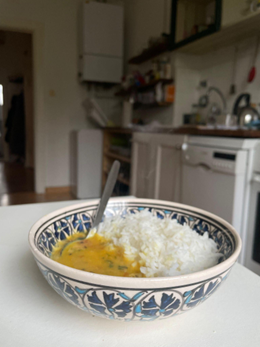
    One of my most meaningful encounters was with Ezgi, a Turkish girl I shared my first apartment with. What were the odds that I’d meet someone just as broken as me at that exact point in life? We were two souls searching for solace, finding comfort in our shared vulnerabilities and quiet dreams, despite coming from very different worlds. Over cups of Turkish tea and bowls of Indian daal[4], we talked about life, interpretations of loss and grief, and the exhausting bureaucracy of finding a therapist in Heidelberg.

    It was hard when she moved to the Netherlands to live with her boyfriend; life in Heidelberg had been too lonely and depressing for her. I felt the same, but I couldn’t leave. My student loan from India didn’t give me the luxury to return home. I was happy for her, but deeply sad for myself. She invited me to visit her while I was struggling to find stable housing and a student job. I was crumbling under self-doubt, checking flight tickets home almost every day. I still remember those seven hours on a FlixBus, with each hour closer, I lost a fraction of the weight I was carrying in me. Since day one, she felt like the closest thing to family, and those seven days in Enschede were quietly healing. I arrived on a grey evening and left on a brighter day, just like my thoughts. We slow-biked through the town, floated in a sunlit pool, spent hours in libraries, hunted for cute clothes on sale, and lingered around coffeeshops for hours, doing simply nothing– Adda5, an underrated side-effect, less medicine for the soul!

    In Santiniketan, I couldn’t imagine going out for walks in the evenings without my best friend. Two years later, I realized that solitary walks by the Neckar river had become my moments of reflection, where I grappled with anxiety, homesickness, and a slowly growing attachment to this new life. My journey as an international student has been all about embracing the unknown and finding fragments of home in unexpected places, like spontaneously hopping on a bus to explore the hills just beyond the city. Armed with my anthropology texts I began to understand the intricacies of my emotions and the quiet strength it took to keep moving forward.

    Life has an uncanny way of making me mourn for things yet to be lost. It’s a preemptive grief, a shadow cast by the inevitability of change. My longing for Santiniketan, transformed into an anticipatory ache for Heidelberg, a feeling I know will deepen when I eventually leave. These two places, reflections of each other in the river of my memory, are bound together by this bittersweet thread of longing.


    [1] Santiniketan – A small town in West Bengal, India, Santiniketan was founded by Rabindranath Tagore’s father and later developed by Tagore into a hub for progressive education and the arts. With its emphasis on learning in nature, it is both a place and a philosophy that nurtures creativity and reflection.

    [2] Tagore’s musicRabindra Sangeet, Tagore’s music blends classical Indian traditions with Bengali folk and Western melodies. Deeply lyrical and spiritual, his songs explore love, nature, devotion, and the human condition, forming an emotional soundtrack to everyday life in Santiniketan.

    [3] Miyazaki – Hayao Miyazaki, the renowned Japanese filmmaker and animator known for his richly imaginative films that often explores themes of nature, resilience, and the innocence of childhood. Hayao Miyazaki’s stories are heavily influenced by European landscapes, architecture, and folklore, even though they are deeply rooted in Japanese aesthetics and storytelling traditions.

    [4] Daal is a staple dish in Indian households, made from lentils cooked with spices. Simple yet comforting.

    [5] Adda: is a beloved Bengali tradition of informal, free-flowing conversations among friends or family, even strangers. It’s not just talking, adda is a cherished form of social bonding, where topics can range and stretch for hours over cups of tea. Rooted in leisure and intellectual curiosity, adda is as much about
    the connection as it is about the content of the conversation.

  • #agency, #migration and #mobility: Drifting Beyond the Walls – Queer Chinese International Students in Search of Liberation

    #agency, #migration and #mobility: Drifting Beyond the Walls – Queer Chinese International Students in Search of Liberation

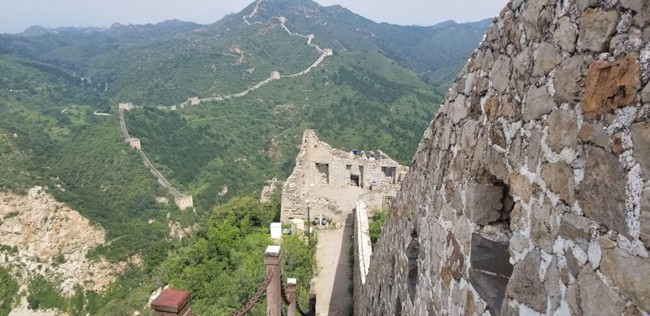
    The Great Wall in the People’s Republic of China. It also evokes the notion of the “Great Firewall,” a term referring to the blend of legislative measures and technological controls implemented by the country to monitor and restrict domestic internet access. Photo taken by the author.

    Walls, whether physical, like the Berlin Wall, or virtual, like the Chinese “Great Firewall,” often divide the world into two distinct spheres: the world “within” and the world “outside”. The “within” sphere typically represents restriction, censorship, and surveillance (as seen in East Berlin and the Chinese network environment). In contrast, the “outside” world often symbolises freedom and prosperity (as exemplified by West Berlin and the wider World Wide Web). People raised within these walls often become so accustomed to societal constraints that they may not recognise them as inconveniences. However, some individuals yearn for life “outside” and are even willing to sacrifice their lives to attain freedom.

    This dynamic echoes the plot of the popular anime/manga Attack on Titan (nerd alert). The protagonist, Eren, was born and raised within walls that separate his people from the Titans—mysterious, gigantic creatures that prey solely on humans. Eren dreams of a life where humanity can live freely in the vast world beyond the walls that “protect”, even though most people within the walls are content with their peaceful, albeit restricted, existence.

    In the series, Eren is often metaphorically depicted as a bird soaring freely in the sky. This short reflection similarly explores a group of “bird-like” people who yearn for freedom “outside” the wall – the queer minority in China. More precisely, it focuses on queer international students holding Chinese citizenship. Why queer and Chinese? In China, like in many other countries that do not support queer rights, queer people grow up learning that homosexuality is considered a significant deviation from the norm. What makes the experience of Chinese queer individuals unique, I believe, is the contrast between the Chinese system and the system in democratic countries. In democratic nations, the legalisation of same-sex marriage can be and has been achieved through the exercise of fundamental rights, like engaging in civil society movements or staging protests. However, the authoritarian nature of China prevents queer individuals from even envisioning the possibility of fighting for their rights through legal channels. How, then, is China different from other homophobic authoritarian countries? Lawmaking in other homophobic countries might be influenced by economic sanctions from other nations, for example, but the growth of China’s influence on the world economy makes this less likely to happen in their case.

    Despite these limitations, the influx of soft culture, such as music, films, and Japanese BL (Boys’ Love) themed literature and art, has inspired a significant number of queer Chinese people to dream of a life outside China. In this imagined space, they can love freely without facing persecution, a stark contrast to the often restricted, sometimes tragic and traumatic realities of their lives as queer individuals in China.

    Queer Chinese students studying abroad offer a compelling case of migrants actively shaping their own “escape.” Due to the legacy of the one-child policy, most individuals of my generation are only children, receiving significant financial support from their parents, who aspire for them to lead successful lives. Sending children to study overseas has become an attractive option for many Chinese families, where they can gain access to prestigious global universities without the intense pressure of the Gaokao, China’s university entrance exam system. For my MA research, I interviewed 14 queer Chinese students who were either studying or had studied abroad. Many acknowledged that their pursuit of academic achievement was closely intertwined with a hidden longing for the “free world”—a place where they could openly embrace their queer identities. By securing financial backing from their parents under the promise of future success, they effectively concealed their deeper desire for personal liberation. This phenomenon underscores how these students strategically navigate familial and societal expectations to forge a new life abroad, exercising a distinct form of migrant agency.

    Living away from their biological families and the social norms they once had to follow, queer Chinese students experienced a newfound sense of freedom while studying abroad. However, this liberation came with its challenges. Tristan (pseudonym), a trans-masculine interviewee, shared that it was in the United States where he first encountered the academic field of gender and sexuality studies—an experience that deeply empowered him. Additionally, Tristan was able to navigate the comparatively accessible process of starting hormone therapy through his student insurance, an opportunity that allowed him to affirm his gender identity. The ability to engage with queer scholarship and access medical transition in the US services gave Tristan a profound sense of liberation. However, each time Tristan crossed the US border, he was required to queue in the lane designated for “aliens.” He found this label deeply unsettling and offensive, believing it dehumanises migrants by reducing them to a mere legal status, stripping them of their rights and dignity. Tristan also expressed frustration with US visa regulations, particularly for international students who had just completed their degrees. For Tristan, the stark contradiction between the US’s celebration of queerness—promoting diversity and inclusion—and its treatment of migrants as “aliens” and potential security risks became a major source of psychological distress. This experience also resonates with other interviewees who studied in Europe, where their queerness was acknowledged and respected, yet their migrant status remained a point of exclusion and discrimination.

    In April 2024, Columbia University enlisted the NYPD to crack down on students who were peacefully protesting through an encampment, speaking out against the United States’ complicity in the oppression of Palestinians. Since then, numerous other prestigious universities across the U.S. have followed suit, escalating their suppression of student activism. This wave of repression has also spread to Europe, where police in countries such as Germany, France, Sweden, and the Netherlands continue to harass and detain peaceful protesters. Following the inauguration of the new U.S. administration, authorities have taken their actions even further, now detaining and attempting to deport international students who support Palestinian rights—even those who hold green cards.

    As an overseas Chinese individual myself, who has been deeply affected by learning about the state’s violent suppression of the 1989 Tiananmen Square movement—another student-led protest that faced violent state repression—the current scenes are profoundly unsettling. The United States and Europe once stood as beacons of democracy, guiding and inspiring queer Chinese nomads in their search for freedom. Now, that beacon seems to be fading, leaving once-liberated hearts lost in a void.

    *Spoiler alert* In the final chapter of Attack on Titan, Eren ultimately achieved his goal of venturing beyond the walls and eliminating all the Titans. However, his hope shattered when he realised that the world outside was not the land of freedom he had envisioned. Instead, he was compelled to keep fighting for the freedom of his people. I found the entire storyline deeply resonant with the experiences of queer Chinese students who, yearning for liberation “beyond the wall,” eventually discovered that what awaited them was not the promised and imagined “freedom,” but even greater challenges, obstacles, and a profound sense of disillusionment.

    Like Eren, I also believed that leaving China might lead me to freedom, democracy, and justice. But as I continue to follow the news of the continuous oppression of innocent citizens around the world by armed settlers and the world’s complicity in it, I feel nothing but tremendous despair. The world “beyond the wall” is not the paradise of freedom I once imagined.
    Queer liberation is a universal fight that transcends the experiences of privileged white gay men. It encompasses individuals of all races, genders, cultural/social backgrounds and immigration status. Everyone in the world has the right to live freely, to express their identity without fear of persecution, and to have their dignity and cultural heritage respected.

  • #Liminality: Finding My Way Home

    #Liminality: Finding My Way Home

    Photographed by Amrita Datta

    In the previous part of this piece, I was still in Heidelberg, desperately trying to conceptualise the idea of home and belongingness. I felt that I had failed, and I see why. Amidst the chaos of no employment, no stable housing, poor mental health, and an endless stream of uncertainties about life in a foreign country after a half-hearted second master’s degree, there was no ‘home’. There was ‘surviving’ from day to day, which I called independence.

    In this draft, I am back home in Santiniketan, India. Not much has changed, apparently. I still feel my chaos spilling over, but now, I let it. I’m no longer battling to find order in every moment. When I allow my chaos to breathe, sanity finds its way in, easier. Maybe that’s what a home truly offers- a space to let the madness and contradictions of thoughts exist and, in doing so, make room for peace.

    Honestly, more than a return, this feels like a new arrival, especially after what feels like a war in my head. I’ve come back to the same two people whom I’ve called my parents for almost three decades, but it feels like we’re meeting for the first time. Sometimes I notice them watching me do my daily chores in the kitchen, and I overhear them discussing how I have changed, that I am calmer and responsible. If only they knew that in all those moments, the outer calm was a disguise to desperately hide the inner chaos – a fragile effort to comfort the terrified little girl within, afraid of being swept away again by the whirlwind of shifting realities. That at 29, she still feels lost, unsure of how to walk herself through the maze of life.

    Odd as it sounds, my path to Heidelberg began with a heart-led detour; a brief, whirlwind romance with an Indian who had already made this city his own. Moving to the same city felt like the best decision at the time, a romantic leap that I believed would bring me closer to love. Everything aligned perfectly: I was accepted into the only programme I had applied to, and I looked ahead to all of it with a mix of nervousness and excitement, ready to embrace this new chapter in my life.

    However, it was a decision driven by impulse and desperation to find something greater in moving continents for love, when I barely knew how to hold love for myself. A decision as rash and half-formed as that turned against me with all its might, and within three months, I found myself facing an unexpected life. I moved out of a spacious duplex to a small, mouldy room on Plöck Street, leaving behind the only person I knew in the country. Suddenly, after living with my parents under the same roof all my life, I was alone in Germany in cold February, grappling with finances, running out of money for basic groceries, and navigating a world where I couldn’t understand the language or make sense of German bureaucracy. Of course, I cried myself to sleep most nights.

    I remember that girl I was when I arrived in Heidelberg in 2021, a story I now recount with equal parts laughter and a tinge of heartbreak. She lived in bubbles, floating from one fleeting moment to the next, innocent to life’s bigger struggles. She wasn’t exactly curious to learn or grow but rather mischievously spontaneous, carrying the air of someone untouched by true hardship. Life to her felt like it moved in five seasons a month, so quick, so chaotic, and yet so full of possibilities.

    I also often think back to the community that quietly took shape around me as I struggled in Heidelberg. We were just six in our cohort when we started, and each one played a role in shaping how I understand myself today. The idea that we didn’t need to compete for grades but could create an environment that fostered better thinking and a free flow of ideas profoundly influenced me. The belief that opportunities are not scarce, but can be created, has shifted the weather in my mind. I’ve come to realize that health, both physical and mental, is non-negotiable. And the understanding that what we consider “mainstream” or “alternative” is often just a matter of perspective has transformed how I view life as it unfolds.

    My friends had poured in support and kindness, yet I was depressed and emotionally fragmented in Germany. I keep revisiting and refreshing my lens, trying to understand what went wrong. I tried psychiatric medications, therapy, smoking, loving, studying, escaping, belonging, ideating- everything I could think of, and yet, there remained a lingering void within me, an emptiness that seemed to consume everything, both inside and out. The more I resisted, the stronger it persisted. I tried to delete that void, and it restored itself bigger. It was heavy and hollow like an ancient earthen vessel that has existed as long as I have.

    It took years to shift my gaze inward and face that void. The shift happened because I met people in Germany who practiced mindfulness in different ways. They taught me how to listen to one’s mind and body when there is discomfort. They taught me how to dance as a difficult emotion arises. I learned ways to release pain instead of suppressing it further. Through long conversations, barefoot walks in nature, and quiet bike rides through open fields, I slowly realised that I’d never truly known how to belong or be present in my own life. My search for an external home (or validation) in people and future circumstances was always bound to be futile. Even now, as I feel misplaced in my home in Santiniketan on some days, I am gradually learning that belonging and placing oneself takes conscious practice. It requires mindful attention and connection to truly listen, understand, and feel at home, with oneself and with others.

    Living life on the surface, fueled by spontaneity, no longer feels fulfilling to me, this marks a significant change. Now, I seek practices that help me feel grounded, like writing. I write everything as I feel and witness my thoughts and emotions pass by. This article itself was born in the pages of my diary. Every draft of this piece is evidence to me as of how I have evolved as a person, mostly inward. Writing helps me gather my thoughts and gives me the freedom to flow when needed.

    I started this practice some ten days before leaving Germany this time, when my chaos was at its peak. A chaos that knew no bounds, and it showed in every quarter of my life. I was barely connected to my parents. I could not sort my belongings just like I could not sort my thoughts. I had been unemployed for over 6 months. I had a student loan. I could not decide what to eat, when to shop, when to rest and what to say or even how to walk sometimes. There were at least five different splits in my head telling me different things in different ways, all at once. I went to two therapists, and both of them rejected me on the grounds of the complexity of my thoughts and my poor German.

    My mind would set off a domino effect quite quickly, those days, a cascade of “shoulds” that weighed me down.

    I should make my bed.
    I should care.
    I should join Dad’s business.
    I should give up my German visa.
    I should wake up on time.
    I should create art.
    I should sing and not waste my talent.
    I should put family before career.
    I should put career before family.
    I should put myself first.
    I should shower.
    I should make my bed.

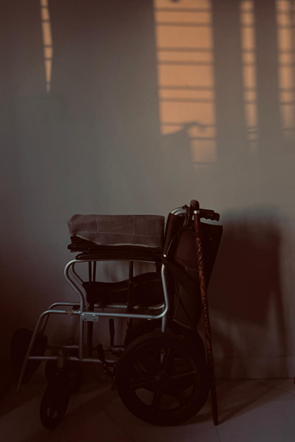
    Writing also comes to my rescue when I know a change is about to hit me again. I am back home after one and a half years. My grandfather is gone, which I knew. I walked into his room, (un)expecting the usual warmth; I was greeted by his photograph, his smile still gleaming at me. His wheelchair now sat piled with his clothes, weighed down by memories that seemed to fill the room. The room itself was unmade, untouched. At that moment, I knew that my parents had been struggling, carrying the weight of my emotional absence and my grandfather’s final days.

    I remember the afternoon I heard of his passing; he was my favourite grandparent. I was in Heidelberg, sipping my favourite cappuccino with hafermilch around noon. Those days, I was numb to much of what surrounded me, wondering if I would ever make something of myself. When I heard the news, a quiet grief washed over me in that café. It wasn’t a loud cry but a soft, inward weep, as the reality slowly dawned on me; I would never see him again. But there I was, still holding that cup of cappuccino, finishing it slowly, paid the bill, and walked out, the doorbell’s soft twinkle marking my departure, as if nothing had shifted.

    My education in medical anthropology allowed me to ask: How do we truly experience a loss when nothing around us signals it? I couldn’t hear the cries, the silence, the chaos, or the urgency. There were no smells of medicines or flowers, no palpable absence, nor any presence of the loss. I couldn’t grasp what it meant for my parents to lose their father in that moment, or what it meant for my father as he desperately tried to save his father and sit with his grief. I soothed myself, telling myself I would feel it all at home.

    Now, I’ve been home for two weeks, and it still hasn’t hit the way I expected it to. I wanted to cry the way I cried for my other grandparents when they left. I knew that the moment had passed, the rituals were over. I missed all of it. And so, I don’t remember him leaving. I only remember his wrinkled, soft hands and the tiny diamond ring on his index finger. During our video calls, he would always ask when I’d return. He passed away waiting for me, while I was busy trying to make sense of my life in Germany.

    still haven’t found my way in the external world or figured out the paths I need to pave for myself. But what feels almost magical is that I can say this: I am learning to work on and walk with myself. This morning, Ma asked me to shower and pack food for Baba. Half-asleep and unready, I resisted in silence. My mind was still caught in a dream of walking freely down Rohrbacherstrasse, only to stumble upon the haunting image of Palestinian babies dying of hypothermia. As I stirred awake, I caught myself expecting to wake up in the house in Darmstadt (where I spent the last few months before leaving Germany). The dissonance hit me- I was in my room here in India. Its small windows felt like a pale comparison to the one in Alice’s Berlin apartment, the one she doesn’t even live by anymore. The layers of displacement, from dreams to reality(s), made me pause, grappling with the subtle ache of existing between worlds that no longer felt fully mine.

    From nowhere, I felt a sharp anger at myself for not living mindfully in Germany, for missing career opportunities, and for always letting my room become a mess, whether in Heidelberg or Santiniketan. A few months ago, I might have stormed out of the house, lit a cigarette, and doom-scrolled Instagram until the thoughts faded, only for them to resurface later. But today, I walked out of the room quietly and made myself tea, even though it wasn’t “tea time” in the house.

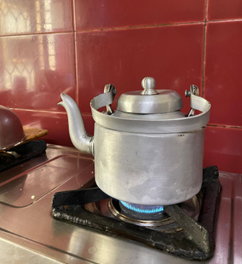
    As I poured water into the teapot, something shifted. I felt a little lighter, and it hit me: I was simply missing Germany and the rhythm of doing things on my own. While letting that realisation settle in, I turned on the stove, placed the pot, and watched the water boil. I thought about how, here in Santiniketan, I rarely think about what to cook or clean. House help handles these chores so we can focus on “bigger” tasks like earning money and figuring out life. Yet in Germany, I often complained about how the little things, like cooking and cleaning consumed me, leaving no time to plan a research paper, exercise, or think about life after graduation.

    And now, here I am. Post-graduation and all those past anxieties haven’t changed this moment at all. I brought my tea back to a messy room and, with courage, asked myself what was wrong. A voice answered that she’s scared to let go of the visa. Scared of disappointing her parents, and the little Amrita who once dreamed of a “good life.” With the first sip, I reminded her that a good life was never about a place, job, or title. It was always about how she felt in those spaces. Then the conversation between those two selves inside of me was what I would call a fantastic conflict resolution over a cup of tea.

    It’s indeed taking significant emotional regulation not to fall back into the patterns that once consumed me before I left for Germany. For instance, when my parents argue, I want to jump in and mediate; when my uncle mistreats my grandmother or my aunt dismisses therapy, I feel an urge to fix it all. I pause to remind myself that India will both trigger and heal me, but only if I consciously choose to belong. Judging and running away won’t bring me closer to that sense of belonging; embracing the complexity might.

    I overthink because I can’t decide where home truly is—here or there. It feels like an endless tug-of-war: choosing abroad feels like abandoning my parents; staying back feels like sacrificing the possibility of building a different life. Should I stay to nurture the family business my father built from nothing—the one that gave me the privilege to dream beyond borders—or should I escape the struggles of the Global South for a life of better resources, but only for myself? Do I accept the idea that I’m responsible only for my own growth, or dare to redefine success, challenging the illusion of empowerment tied to upward mobility and creating something meaningful instead?

    How do these dreams coexist? How does the local embrace the international? How do I detach yet stay connected? How do I leave and arrive, all at once? Perhaps in the same way I ask and answer these questions, by rediscovering myself where I thought I was lost. By realizing that my void isn’t empty anymore, that there’s a strange order in disorder and sanity in madness.

    My journey, though challenging, has forced me to confront myself in ways I never expected. It stripped away layers of pretence, revealing a strength and resilience I didn’t realise I had. Even the heartbreak that initially brought me here feels, in hindsight, like a necessary storm; one that steered me towards self-discovery and a life of deeper fulfilment. Yes, I found love again, the kind that stays through every shape-shift, that softens the edges of becoming. The kind that shows up, gently and steadily, reminding me that friendship is the first home of any love, near or far, which only reinforces the feeling that perhaps every misstep, every displacement, is part of being placed better.

    Now, I find myself re-inhabiting spaces I once thought I knew, only to see them through fresh eyes. In the process, I’m crafting a home within myself, not bound by geography, walls, or fleeting
    circumstances. Writing has become my broom, sweeping the neglected corners and making room for clarity in that home. This home may shift with seasons, its walls weathered by time and its windows facing new horizons, but it will always offer me sanctuary. And in this space, I hold the power to decide who enters, who stays, and in what capacity. This is not just a home; it’s a testament to belonging, shaped by the grace of choosing and the courage to keep building.

  • #Memory: Retrotopian Longing: Procedural Curation and Transcultural Dynamics

    #Memory: Retrotopian Longing: Procedural Curation and Transcultural Dynamics

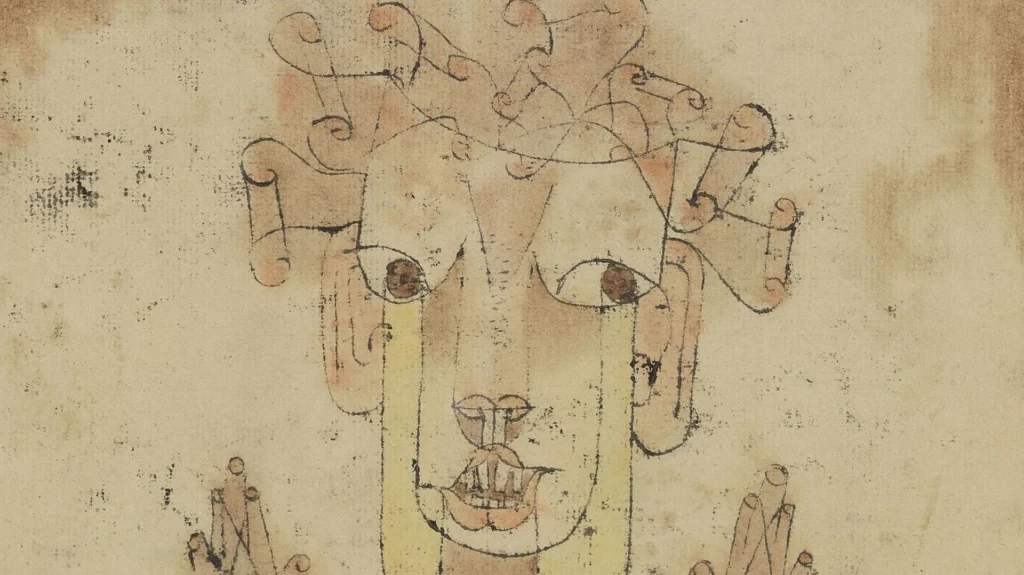
    Paul Klee, Angelus Novus, 1920, Collection The Israel Museum, Jerusalem Photo © The Israel Museum, Jerusalem by Elie Posner

    In his essay “Thesis on the Philosophy of History,” philosopher Walter Benjamin describes Paul Klee’s painting Angelus Novus:

    “A Klee painting named Angelus Novus shows an angel looking as though he is about to move away from something he is fixedly contemplating. His eyes are staring, his mouth is open, his wings are spread. This is how one pictures the angel of history. His face is turned toward the past. Where we perceive a chain of events, he sees one single catastrophe which keeps piling wreckage upon wreckage and hurls it in front of his feet. The angel would like to stay, awaken the dead, and make whole what has been smashed. But a storm is blowing from Paradise; it has got caught in his wings with such violence that the angel can no longer close them. The storm irresistibly propels him into the future to which his back is turned, while the pile of debris before him grows skyward. This storm is what we call progress.”[1]

    In an age defined by technological progress accompanied with economic uncertainty which has been escalated due to the pandemic, wars in different parts of the world, and an increase in climate disasters, it is not surprising that people reminiscent to the angel of history are turning their heads to the past and are longing for an age before social media even if the search for this nostalgia is very much facilitated not from memory but from code. Nostalgia, as artist Svetlana Boym writes, “is a sentiment of loss and displacement, but it is also a romance with one’s own fantasy.” She argues that nostalgia is a symptom of modern progress, which thrives in fast-paced technological progress, where the sense of time and self can become disjointed. 

    It is at this junction of nostalgia and innovation enabled by a gamified social media algorithm that we see the transformation in the creation of cultural content, how it is shared and experienced. While gamified algorithms provide a mechanism for recreating imagined pasts in a dynamic transcultural form, it is the disjoined sense of time which has become the fertile ground for the longing of what sociologist Zygmunt Bauman calls “Retrotopia”.[2] The concept of retrotopia captures a collective longing for the perceived certainties of the past. Unlike utopias, which project ideal societies into the future, retrotopias look backward, framing the past eras as the pinnacle of stability and harmony.

    Social media platform designs enable their users to voice a kind of longing, a retrotopian nostalgia which is conjured by code. It’s the mechanism of procedural rhetoric at work that threads us back to a past that feels familiar, even if it never quite existed. Author Ian Bogost defines procedural rhetoric in his book Persuasive Games: The Expressive Power of Videogames as the ways in which different digital systems, video games[3] in particular, use rules, regulations, mechanics, and interactions to persuade and shape user experience and ideology. On social media platforms, procedural rhetoric reveals itself in platform designs, algorithms, and gamified interactions that subtly guide user behavior.[4]

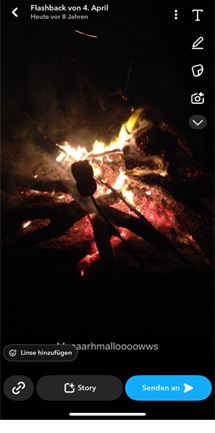
    Facebook’s “On This Day,” Instagram’s “archives”, Snapchat’s “Flashbacks”, all of them conjure a version of our lives that feels more whole than it ever was. They hand us curations, pieces of a story we’re meant to believe, a story that frames the past as something cohesive, something worth longing for. It’s a kind of nostalgia built by the tidy mechanics of code manifested by procedural rhetoric of these platforms.

    These features of the platforms do not merely show all memories; it selects those with high engagement. This selection creates a perception of the past as inherently joyful or significant, amplifying retrotopian longing. The procedural framework of these platforms subtly convinces the users that the platform is a vessel for preserving and reliving a better, more authentic era, even if that era is reconstructed and even idealized.

    This retrotopian nostalgia is further amplified by the visual cultural aesthetics promoted by the platforms. Retro-inspired filters and challenges such as TikTok trends using 1980s synth music or Instagram filters mimicking vintage film, which creates an emotional link to an imagined past. Another example of visual cultural aesthetics endorsed by platforms that promote a longing for retrotopia is the resurgence of interest in Polaroid photography and cassette tapes. Social media’s procedural rhetoric frames these technologies as symbols of authenticity and simplicity, contrasting them with the perceived complexity and superficiality of the present. This framing persuades users to participate in practices that reconstruct these retrotopian ideals.

    Procedural rhetoric plays a key role in promoting and curating filters and challenges. Algorithms prioritize retro-themed content based on user engagement, reinforcing its visibility and appeal. This cyclical process of promotion and interaction persuades users that these nostalgic elements are universally desirable, fostering collective longing for an idealized past.

    Platforms like Reddit and Facebook that have a feed sorted algorithmically via a reward system through upvotes or likes foster digital communities that are centered around retrotopian nostalgia. Groups dedicated to sharing vintage photographs, old music, or retro gaming culture use social media’s structural mechanics to create spaces that celebrate the past, which also reinforces the participation and collaboration within these communities. By shaping how users interact and engage with content, procedural systems cultivate an atmosphere where the past is not only remembered but actively idealized.

    While the reconstruction of an imagined past is deeply personal, the procedural systems of social media promote the formation of algorithmic tribes which encourages the process of a collective cultural production of these retrotopian ideals which lead to the transculturation of nostalgic elements. The past gets remembered through a hybridized longing nurtured by the mechanics of algorithms.

    Digital communities actively merge, reshape and transform imagined histories and identities. The mechanics of the platforms push us together; strangers sharing fragments of a past we’ve never quite lived. Aesthetic gestures like a filtered Polaroid or a soundtrack pulled from a mixtape separate these memories from their realities, sand them down until they can slip easily into the collective imagination. The algorithm, with its ever-increasing appetite for emotion, keeps us coming back. This is how retrotopias emerge, hybrid dreams of a past pieced together from disparate cultures and timelines, freed from linear logic and lived truth. They comfort us, these fictions, even as they dislocate us further, leaving us untethered from any sense of the now.

    And yet, here we are, in an age where global loneliness has grown into a shapeless ghost, our dependence on social media is the framework that both holds us up and hems us in. Memory, identity, technology—these threads knot together in ways we barely notice, in ways that demand critical reflection. To engage with the past critically, to reflect instead of merely scrolling, may be the only way to understand the stories we tell ourselves to create a sense of belonging.  


    [1] Benjamin, Walter. Illuminations: Essays and Reflections. Edited by Hannah Arendt. Translated by Harry Zohn. New York: Schocken Books, 1968

    [2] Bauman, Zygmunt. Retrotopia. Cambridge: Polity Press, 2017

    [3] Verhoef, Shannon. “Play and Metapolitics in Angry Goy II.” Diggit Magazine, June 5, 2019. https://www.diggitmagazine.com/papers/metapolitics-angry-goy-ii

    [4] Bogost, Ian. Persuasive Games: The Expressive Power of Video Games. Cambridge, MA: MIT Press, 2007

  • #Agency: Visualizing the February 6 Earthquake – Representations of Disaster

    #Agency: Visualizing the February 6 Earthquake – Representations of Disaster

    Read how, through aid campaigns, social media actively shapes global perceptions but still underscores Western-centric dynamics.

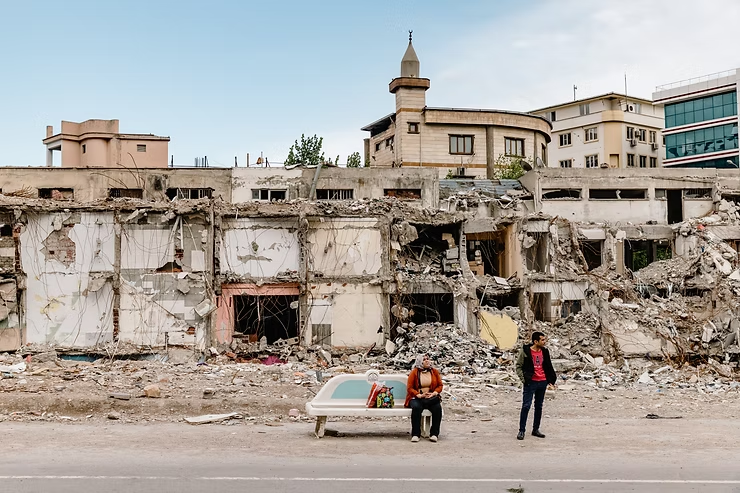
    Photo: Ozan Acıdere, People wait at the bus stop on April 21, in Kahramanmaraş, Turkey. Gazete Oksijen

    On February 6, 2023, at 04:17 a.m., the people of southern Turkey [1] and northern Syria woke up to one of the most devastating disasters of the century [2]. The deadliest earthquake in Turkey’s history, the Mw 7.8 earthquake, struck an area of about 350,000 km2 [3]. Indescribable devastation, inadequate rescue efforts, and support for donation campaigns were immediately at the top of the mainstream and social media agenda. The earthquake was the headliner of the national and international media for days after the disaster. Photographs showing the destruction of buildings and the loss of people, maps showing fault lines, and visuals calling for aid campaigns have become the primary means of thinking and feeling about the earthquake. 

    In the 21st century, the level of information and representation of disasters reached its peaks, in particular, thanks to social media, which helped the creation of new imaginations. Simon Cottle, professor of Media and Communication at Cardiff University, offers a rethinking of the media in a highly intertwined world, specifically looking at “disasters from the inside out and outside in.” It is crucial to look at how, why, and in what ways this interaction takes place. Using the latest example of the February 6 earthquake [4], this article sheds light on the role of graphics in fundraising and aid campaigns and provides a framework for how social media refers to the harrowing situations in suffering distant lands. Thinking about why and for whom aid campaigns are visualized in specific ways points at social media’s role as a moral educator  and opens up how perceptions of disaster develop in other regions and if the circulation of news related to the devastating events creates a broader transcultural “we.”

    As the building blocks of media, photography brings indisputable visibility to disasters. The fundraising efforts, meanwhile, get a more financial and realistic turn on social media, and aid agencies rely on that because of the level of accessibility it offers. While the images of rescue teams working on rescue operations invite people to donate, they do not necessarily call people for help. They might show the earthquake’s devastation, but reaching more people to donate becomes a primary objective through compelling graphics. Those examples demonstrate and compare the level of destruction so that people from other regions (usually wealthier, “more Western”) can feel and understand the situation. 

    The traditional media’s representation informs people about the event and humanitarian assistance. However, social media offer a “civilian surge” that might rely on “unverified” and “insecurely” sourced information flow to the public. Thus, social media platforms such as Twitter (currently X), TikTok, or Instagram provide and aggregate the speed of humanitarian efforts. Their framing can demonstrate the lack of state efforts, inadequate help, and the increasing need for monetary assistance. Naturally, it provides a quick response to people’s basic needs. 

    Corinne Lysandra Mason, Associate Professor and Coordinator of Women’s and Gender Studies at Mount Royal University, argues that humanitarian aid cannot be separated from the relationship between Westerners and others. People who create these graphics aim specifically for Western audiences who would sympathize with desperate others.

    Simple graphics sustain the emotional appeal for the suffering of disaster victims and also carry the response to urgent needs because they rely on the moral spectatorship that can create the transregional commonalities and solidarity.” For instance, the graphic Help Turkey, posted by turkishdictionary, a popular Instagram account with 1.1 million followers, demonstrates how big 10 Euros can be for earthquake victims (see figure on the left). It creates an environment for action beyond wishful thinking “because it can make a difference.” While they are effective for more interaction with the situation, they also recreate the already established knowledge about the separating lines. These examples do not hide their exclusively Western-oriented intention. It clearly targets Westerners to imagine and feel that suffering far away. 

    Moral education does not only show that the Turkish people need even small amounts of donations. It focuses on the comparisons too. The Western communities are invited to feel something over situations that will never happen in their own country. Instead of restricting the suffering only to the earthquake victims, it takes it to the global level. How Big is the Earthquake Destruction Zone, a series of Instagram visuals, shared thousands of times, penetrates people’s imagination. If Help Turkey does not provide enough space for their world of thought, these graphics take it to another level, to their own countries (click through figure below). Instead of just focusing on the loss of human life, they also visualize how life has become unbearable by showing the infrastructural problems in such an immense area. As Cottle mentions, these graphics make “moral infusion” for distant lands because they would be more legible. Consequently, one would anticipate a greater emotional resonance and comprehension in this context.

    These examples aim at making the event imaginable and graspable for everyone, creating an interaction beyond borders via thinking about the event in people’s own periphery. As Lilie Chouliaraki, professor in Media and Communications at the London School of Economics and Political Sciences, points out, as the viewer looks from a distance, they refer back to their own safe world. Its safety comes from the examples given as purely hypothetical. Similar to the representation of Hurricane Maria in Puerto Rico, which is made with “implicit distance,” the same is true for the February 6 earthquake in Turkey. The production of visuals follows the expectations of international audiences, because of the impossibility of framing the disaster without picking an anticipated side. This is precisely the reason why Turks in the diaspora shared these images in a hurry. Urgent needs require urgent solutions, and discourse-making can be ignored. Disasters are used as a means of communication from inside to outside, which builds upon the transculturation of the catastrophe, albeit unequally.

    The effects of the February 6 earthquake continue to be the most severe for the people in the region. Tens of thousands of people have lost their lives, hundreds of thousands of people have been forced to leave their cities, and the lives of millions of people have been irrevocably changed. Even though it is one of the strongest and deadliest earthquakes of the century, it lost its headliner status in the global media after the first week. This is, of course, no surprise. The world goes on, lives change, and other tragedies happen elsewhere. However, this disaster provided opportunities to reflect on how social media approached the reflection on tragedy. Taking on this role as a means of moral education, social media invites Western audiences to a cause worthy of attention, and graphics on fundraising efforts help people to pay attention to distant suffering in a more realistic and calculable way. However, they were more effective in speeding up the relief efforts for the earthquake victims because the visuals helped create a positive public spectacle, which increased the earthquake’s visibility for more people. Still, as this earthquake highlighted, the visual language through graphics does not move away from the already established Western-Other distinction.


    Endnotes

    [1] The official name of Turkey was changed to Türkiye. There is something about this name change that does not sit well with me because it was made suddenly and as a strange political decision by Erdogan’s government, and I am not sure if I am settled with that decision and reasoning. I still continue to say Turkey out of habit. https://www.theguardian.com/world/2022/jun/03/turkey-changes-name-to-turkiye-as-other-name-is-for-the-birds 

    [2] As of July 21, 2023, the confirmed number of deaths is 50,738 in Turkey and 8476 in Syria, which makes it the fifth deadliest earthquake of the 21st century.

    [3] As with the 1939 Erzincan earthquake, the strongest natural disaster (Mw 7.8) struck Turkey since the republic’s foundation in 1923. 

    [4] The earthquake is called the Turkey-Syria earthquake in global media outlets, but Turkish ones usually use Kahramanmaraş depremleri (Kahramanmaras earthquakes), named after the city. I will instead use the February 6 earthquake because I realized everyone in Turkey talks about the date and remembers the event through the date. The Turkish collective memory already chose the date as national mourning and remembered the earthquake on February 6 as they did for the previous immense destruction in the August 17 earthquake in 1999. Since it became part of the memory and significantly impacted most people’s lives, whether physically or mentally, in Turkey, this date gained, if I borrow Pierre Nora’s term, a “lieux de memoire” status. It would have a longer historical significance, spanning decades or maybe even centuries.

    Resources

    1. Chouliaraki, Lilie. “The Media as Moral Education: Mediation and Action.” Media, Culture & Society 30, no. 6 (November 2008): 831–52.
    2. ———. The Spectatorship of Suffering. London ; Thousand Oaks, Calif: SAGE Publications, 2006.
    3. Cottle, Simon. “Rethinking Media and Disasters in a Global Age: What’s Changed and Why It Matters.” Media, War & Conflict 7, no. 1 (April 2014): 3–22.
    4. Ekström, Anders. “Exhibiting Disasters: Mediation, Historicity and Spectatorship.” Media, Culture & Society 34, no. 4 (May 2012): 472–87.
    5. Franks, Suzanne. “Getting into Bed with Charity.” British Journalism Review 19, no. 3 (September 2008): 27–32.
    6. Lloréns, Hilda. “Imaging Disaster: Puerto Rico through the Eye of Hurricane María.” Transforming Anthropology 26, no. 2 (October 2018): 136–56.
    7. Mason, Corinne Lysandra. “Foreign Aid as Gift: The Canadian Broadcasting Corporation’s Response to the Haitian Earthquake.” Critical Studies in Media Communication 28, no. 2 (June 2011): 94–112.
    8. Scott, Martin. “The Mediation of Distant Suffering: An Empirical Contribution beyond Television News Texts.” Media, Culture & Society 36, no. 1 (January 2014): 3–19.
  • #Localization: Translating “Japaneseness” in Food Culture

    #Localization: Translating “Japaneseness” in Food Culture

    Exploring agencies behind the food trend onigiri in Germany

    Photo: Julia Edelmann

    *disclaimer* This article is based on research I conducted from January 2023 to March 2023. The original article conducted interviews with a few local business owners based in Germany. In this article, the brands are anonymized to protect their business and private information.

    When you think about restaurants that serve international cuisine in your neighbourhood, how many and what kinds of dishes are on the menu? Today, you can try cuisine from various parts of the world by visiting restaurants around the corner of your town. Although globalization is often considered as a cause for homogenization of cultures, it does not mean, for instance, Japanese food served in Germany is identical to the one in Japan, neither in terms of ingredients nor in its meanings/connotations. The perspective of framing extended accessibility, proliferation, and variety of food trends as just “cultural appropriation” can obscure the cultural contacts behind the trend, and also who is involved in the process of making the trend. The term cultural appropriation and other metaphors generate a deficiency that captures the culture as one’s commodification: criticism against Japanese restaurants abroad, whose chef is not Japanese is a good example. A transcultural perspective challenges such notions of an apparent “purity”. There is no such food that has not been subject to outside influences, and thus, factually, there is no “pure” Japanese food. In the interactions with other food cultures, it continuously transforms.

    Here, I will take one of the newly appeared food trends in Germany, Japanese Onigiri (rice ball) to explore how the food culture transforms through the process of marketing in Germany, and challenge the notion that culture is subject to commodification by one nation. A transcultural lens is deployed to investigate the making of the trend, which enables us to see it from the perspective of not only the frame of nations but also smaller-scale perspectives like that of individual contributors, and how the culture traveled between places and transformed. It makes an intriguing case, highlighting the role of local retailers of Onigiri in Germany who “translated” food culture into the food trend in Germany utilizing their own interactions with Japanese culture. Since it is a translation, there are aspects that are not translated or nuances of difference that should not automatically be defined as mistranslations as there is no pure original Japanese food which is always the same and can be compared to translated food.

    The onigiri trend has been observed since around the early 2010s in Germany, and it is unique in German-speaking areas according to the number of suppliers reported by Japan External Trade Organization (JETRO), a Japanese government-related organization in Germany. From its appearence, Onigiri here seems to be the same as the one in Japan – it is wrapped within a plastic package and marketed for its conveninence. It is easily accessible in places like chained supermarkets, similar to its distribution at convenience stores in Japan that sell Onigiri anytime and anywhere. Nevertheless, it has distinctive differences in Germany. It is provided with several flavors, reflecting a preference towards a plant-based diet that is practiced by German consumers, and sold at local German supermarkets or small retail shops, and Japanese grocers. Some supermarkets have their own brand for the Onigiri product line, but mostly it is bought from local retailers. In the case of these local businesses, they are often the manufacturer, retailer, and supplier; the majority are from Germany. They manufacture Onigiri every morning and retail it at their own shops, while products are also delivered to shops owned by the other local retailers. Whereas in Japan the flavors are more variant depending on the brands usually run by parent companies of convenience stores, and there is no consideration of veganism or vegetarianism.

    So the question is: how did the business owners in Germany translate this specific food product into the German market? When you look at the retailers’ websites, the emphasized messages about onigiri can be grouped into four categories: 1) healthiness and freshness 2) using Bio (organic) ingredients, 3) gluten-free, and 4) Japaneseness/ authenticity.

    The first three categories link to the shifts in eating habits in Germany and how healthiness gains attention among consumers, which can be observed from a variety of vegan, vegetarian, and bio labels available in a German supermarket. The association of labels with healthiness and freshness was initiated during the civil food movement in the late 20th century, caused by social changes in class structure, people’s values, and the popularization of higher education. One of the initiatives was the Green Movement, led by the Green Party in West Germany, founded in 1980. The movement was expanded and later joined by groups claiming new energy, food, and health forms, which fueled consumers’ demands for healthier, cleaner, and safer food. Around the same time, the Bio (organic food) label started to gain more attention from the consumers. The reason for consuming organic food was not only for the environment, animal protection, or because of the German government’s encouragement. Rather, it was for their own health. These eating habits have been practiced until today in tandem with newer eating habits that emerged in the 2010s: gluten-free, lactose-free, and veganism.

    In Germany, Onigiri is marketed as a healthy product by producers. The majority of consumers here tend to be young women who consider their health on a daily basis, despite the carbohydrates and calories it has. However, it is not marketed in Japan as a healthy food. Why did this shift happen?

    The foregoing image associated with Japanese food in Germany is related to that approach. Sushi was brought to Germany via German exchange students and business travelers who tasted sushi for the first time in the U.S. Therefore, sushi consumed in Germany is affected by American-style sushi. It was marketed heavily by sushi restaurants in Germany as healthy food, reflecting the built image of sushi in the U.S. It was in the 1980s that its popularity heightened to the extent of the so-called sushi boom. In this way, onigiri, or Japanese food in general, is linked to a healthy image. In terms of freshness of onigiri in Germany, which seems to go against convenience food with extended expiration days, owners invest in developing a logistics system to import fresh ingredients from neighboring areas and immediately deliver them to retail shops. Yet, the logistics and delivery depends on the size of business and how many products they have to manufacture, which leads to distinctive definitions of freshness upon each retailer: between a local small retailer who sells it mainly at their own ship and a retailer who sells Onigiri to chain supermarkets.

    The fourth point, “authenticity” and “Japaneseness” played a significant role in their translations. On the brands’ websites, one of the popular motivations for establishing the business is to introduce “authentic” Japanese culture to German consumers. Although “authenticity” here means how similar and accurate to the “original” Japanese Onigiri, as it is stated before, their products are not identical to those Japan, or should not be captured that way. What is, then, Japaneseness to them? How is it reflected in their products?

    One of the similarities among these business owners is that they interacted with Japanese culture before launching their business. Some were exchange students studying and living in Japan, some others were playing Judo, and some liked Japanese culture and often traveled to Japan. Yet, the owners’ source of translation is not monopolized by Japanese culture. Some brands are referring to the origin of the idea as already established Onigiri shops in Britain or France whose business structure and products are also not identical to those in Germany.

    Based on their experiences in Japanese culture in different forms, they developed their own “Japaneseness,” which made Japanese culture Japanese and then implicated it in their products. In other words, their translations are highly inspired by their own interpretation of Japaneseness in terms of food culture. For instance, some see the Japaneseness in using Japanese ingredients, recipes, or employing native staff, while others see it in freshness, convenience, or manual manufacturing process. They are quite particular about the origins of ingredients, especially rice, and seaweed that they consider as core ingredients of onigiri. Where the ingredients are coming from is what tells its “authenticity” to consumers. Some of them use round-shaped rice produced in Italy using Japanese know-how, which makes its quality similar to Japanese rice. In terms of import, social and political factors play a decisive role. For instance, there was a strict import limitation of Japanese products by the German government due to the Fukushima nuclear disaster, which limited one brand from importing ingredients from Japan. Another point is that owners are using plastic packages to separate seaweed and rice in order to keep seaweed as fresh as Japanese onigiri, although customers, who are conscious of the environment, are complaining about its packaging method. This is also observed in their efforts to express Japaneseness to German consumers.

    Exploring the making of the new food trend in Germany revealed local business owners’ agency in translation of their own Onigiri and how they developed the way of translation through their own experience with Japanese culture, interactions with similar businesses run outside of Germany, and consumers’ preferences. It is of course important to pay attention to the top-down power of governmental restrictions on import, or in even bigger scale, international relations with the country where products are imported from. Still, reintroduction of the specific Japanese food based on owners plays a vital role in making Onigiri a trendy food in Germany. This article explains just one part of the Japanese food trend abroad by focusing on the individual agency, and thus there is more space to explore. Since this is still a new trend, it will be interesting to see how onigiri in Germany will be positioned in the future, or how this trend will affect upcoming new Japanese food that will be introduced to Germany.


    Resources:

    1. Hamm U. and J. Michelsen, „Organic agriculture in a market economy: Perspectives from Germany and Denmark,” eds., Fundamentals of Organic Agriculture, Conference Proceedings, 14th IFOAM (1996).
    2. Heldke,Lisa M. Exotic Appetites: Ruminations of a Food Adventurer (New York and London: Routledge, 2003), intro.
    3. “Italpo Enterprise – Okomesan: Premium rice for Japanese Cuisine”, Italpo Enterprise, accessed March 14, 2023, https://www.italpo.it/en/.
    4. “JETRO – Norinsuisanbutsu-Shokuhin Kunibetsu Marketing KisoJoho“ (Agricultural, Forestry, Fishery and Food Products Basic Marketing Information by Country), JETRO, accessed 20th June 2023, https://www.jetro.go.jp/ext_library/1/_Marketing/2022/marketing_basicinfo_Germany_2208_r.pdf.
    5. Keßler, Sandra. “Japanisch, exotisch, kosmopolitisch, modern: Sushi als Global Food in Deutschland,” in Interkulturalität und Alltag Interculturality and everyday life, eds. Judith Schmidt et. al. (Münster: Waxmann, 2016), 152.
    6. Schmid, Carol L. “The Green Movement in West Germany: Resource Mobilization and Institutionalization” Journal of Political & Military Sociology 15, no. 1 (1987): 34. URL: http://www.jstor.org/stable/45371755.
  • #Transculturality: In Orbit — Balancing on Transcultural Studies

    #Transculturality: In Orbit — Balancing on Transcultural Studies

    Sensing Transculturality in orbit

    Photo: Risako Tominaga

    As I step onto the installation, the entire spider-web-like net covering the whole ceiling of the museum gravitates toward my feet. Looking through the exhibitions and audience from the above, my fears immediately spread like a vibration of the net at 25-meters-high. I am inside in orbit (2013), Tomás Saraceno’s installation in Kunstsammlung Nordrhein-Westfalen (K21), Düsseldorf, Germany. Imagine yourself in orbit.

    Five giant spheres are floating, and only the middle sphere is covered with a mirror, while the other four are transparent. If the installation could be read as a metaphoric form of cultures ― or nations, groups of people, traditions, which all are wrapped in a foil with a label on it― the transparency would demonstrate the possibilities to be connected with other spheres of culture. The mirror would reflect other cultures or one’s self, even myself as a researcher. They also look like ‘clouds’ that accumulate information on the web to borrow the idea of ‘the Spiderʼs Web’ by Inaga Shigemi, a scholar of comparative literature and cultural exchange. Inaga, in “Huayan/Kegon 華厳 View and Contemporary East Asian Art,” theorized and connected the notion of the World Wide Web with words for “clouds(雲)” and “spiders(蜘蛛)” that are both pronounced “kumo” in Japanese. Digital cloud space in the World Wide Web and the web of “spiders”, captures researchers and is simultaneously dominated by researchers. A vertical space is created between them and the people on the ground who watch them, just as a spider would descend with a thread hanging down from its web.

    Furthermore, considering the spider’s web as a metaphoric model in Transcultural Studies, Monica Juneja, Professor of Global Art History at the Heidelberg Centre for Transcultural Studies, critically points out the missing perspective of ‘Ariadne’s thread’, a concept the late French philosopher Bruno Latour explained as “the thread of networks of practices and instruments, of documents and translations” between the global and the local as well as human and non-human. She highlights in “Can Art History Be Made Global?: Meditations from the Periphery”, “[p]roviding a two-dimensional visualization of a global spread, the nodal points and connecting lines of a network when, for example, used as a tool to study modernism, are not in a position to shed light on the third dimension that encompasses differences, unevenness and asymmetries of power, so constitutive of global modernist art movements.”

    Speaking of Latour, Saraceno’s strong engagement with his theories leaves even more room for continuing the discussion. According to an interview with Saraceno after Latour’s death, the two had been in dialogue for about 15 years. Likewise, Latour was influenced by Saraceno’s work. In “Some Experiments in Art and Politics,” he reviewed Saraceno’s work as follows:

    I have come to use the word “composition” to regroup in one term those many bubbles, spheres, networks, and snippets of arts and science. This concept plays the same role as Saraceno’s percept of elastic tensors. It allows us to move from spheres to networks with enough of a common vocabulary, but without a settled hierarchy.

    In Transcultural Studies, just wandering around an already-established network is too risky since we have to see the process of the formations of culture, which are like the floating spheres of the installation. In order to examine the interwoven threads of the network, Saraceno’s other project, “Arachnophilia” is another good example. The artist put spiders’ activities into data, and digitalized the sound produced by their vibrations of the webs, visualizing the third aspect that is not only connected with the physical web but is yet influenced by a vibration invisible to human eyes.

    “Arachnophilia” derives from the story of Arachne, a female character of Greek mythology who was transformed into a spider by the goddess Athena for making her furious because Arachne’s weaving skill was superior to Athena’s. The act of weaving is connected

    to anthropologist Tim Ingold’s discussion on “meshwork” instead of “network.” Saraceno’s project regards a spider’s web as “both model and metaphor for the fluid and dynamic meshwork of the ‘web of life itself.’” In addition, Inaga adds on Ingold’s theory by referring to one of the founders of Shingon Buddhism, Kûkai, and his idea on the Mandala of Both Worlds (Ryokai-mandara), arguing that in its one side, Diamond World (Kongo-kai), a number of transparent crystals steadily and subtly vibrate while in the other, Womb World, consciousness flows fluidly as what is called Arayashiki (ālaya-vijñāna in Sanskrit). The tasks now are to examine what is missing from the “web” and the elements of those threads, just like the sounds from the vibrations of spider webs.

    Going back to in orbit, you feel the net shaking, but the vibrations would be the new findings that the artist or architects could never calculate, which is your task. You will intentionally or unintentionally have to keep tracing the connections; examining the texture of the threads for the next sphere to reach, even if you are scared.


    Resources:

    (1) Arachnophilia. (n.d.). “Arachnomythologies, or… Ways to know the Universe in a Spider/Web.” https://arachnophilia.net/arachnomythologies/. Accessed on July 1st, 2023.

    (2) Inaga, Shigemi. “Huayan/Kegon 華厳 View and Contemporary East Asian Art.” CrossSections 5 (March 20, 2013): 2–25.

    (3) ———. “On the Validity of Spider-Web Model: Reflection on the History of Scholarship Post Face: What Is Lying beyond the Avidya of Electronic Spider’s Web”.” In Avidya on the Spiderʼs Web: In Search of Psycho-Somatic Ethics in the Age of Meta- and Multi-Verse, edited by Shigemi Inaga, 299–310. Kyoto: Kachosha, 2013.

    (4) Ingold, Tim. Being Alive: Essays on Movement, Knowledge and Description. London ; New York: Routledge, 2011.

    (5) Juneja, Monica. Can Art History Be Made Global?: Meditations from the Periphery. Berlin/Boston: De Gruyter, 2023.

    (6) Latour, Bruno. “Some Experiments in Art and Politics.” E-Flux Journal, no. 23 (2011): 1–7.

    (7) ———. We Have Never Been Modern. Cambridge, Mass: Harvard University Press, 1993.

    (8) Tomás Saraceno, “Studio Visit with Tomás Saraceno” interviewed by Berlin Art Link, 2020, YouTube video. https://www.youtube.com/watch?v=05rgQUFPTjc&t=81s.

    (9) Tominaga, Risako. “Koramu: Installation by Tomás Saraceno, in Orbit (2013) [Column: Installation by Tomás Saraceno, in Orbit (2013)].” In Avidya on the Spiderʼs Web: In Search of Psycho-Somatic Ethics in the Age of Meta- and Multi-Verse, edited by Shigemi Inaga, 196–97. Kyoto: Kachosha, 2013.