Category: Interval Hashtag

  • #Cultural Mobility: The Void — Otherness in the Fluidity and Uncertainty of Lives

    #Cultural Mobility: The Void — Otherness in the Fluidity and Uncertainty of Lives

    A short review on The Ocean In A Drop: solo exhibition of Trinh T. Minh-Ha
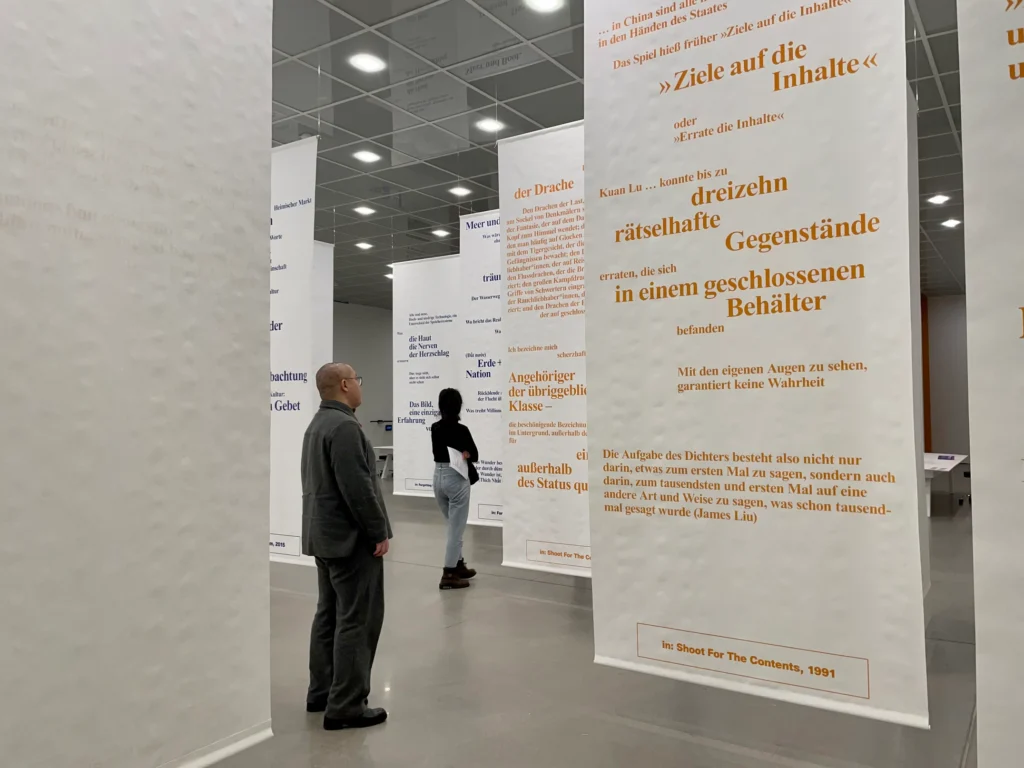
    Photo: Lena Lanchen Liu

    The migration of objects and ideas is constantly reshaping our perspectives about “culture”. Although the traditional notions of ethnic authenticity and purity have never deceased, there have been reassessments on the fundamental process of culture regarding its fluidity and hybridity due to the rising age of global mobility. Hence, culture is no longer seen as a result but rather a thread of processes. And the heart of this matter lies in the surprise of movement, the sense of not quite knowing where the journey will end or even where it began. To deal with this sense of unhomeliness, cultural mobility studies ponder the mechanism through structural struggles and ask what agencies are involved.

    The solo exhibition of Trinh T. Min-ha showing last year in the Württembergischer Kunstverein Stuttgart is a typical example of a mobility study on culture and resonates with Greenblatt’s manifesto of ‘Cultural Mobilities’. The exhibition mainly consists of six lengthy films directed by the artist Trinh T. Min-ha. The films are played simultaneously in separate berths. The sounds and images reveal how Min-ha reacted to the contact zones of cultural exchanges and the sensation of rootedness, which implies the personal background of Min-ha, who originated from Vietnam and emigrated to the USA during the Vietnamese war. She is known for films, music compositions, and literary works, depicting her transcultural life experiences, in which the artist tried to “speak nearby” with intimacy and respect when approaching foreignness and the otherness.

    Among those six prominent films, chosen from Minh-ha’s poetic oeuvre from the 1980s to today, What about China? is the most recent work, premiered in 2021. The film surrounds the perceived harmonized culture in China, in the sense of being in balance with society, with nature, and with oneself. Through images, ambient sounds, monologues from different persons, and the singers’ voices, Minh-ha is trying to respond to the calling of China in herself. How has the history and culture of China called upon her Vietnamese roots? What has China caught in the world’s eyes? When and which China do we tend to talk about? These are different threads that weave together into the non-linear narrations of the film.

    Another artwork from the exhibition is Surname Viet, Given name Nam, which was shot in the year of 1989. In contrast to What about China, Surname Viet, Given name Nam has a rather obvious narration path. The plot of the film was connected by interviews with Vietnamese women. Unlike the previous film, the figures featured in this film have chances to speak in front of the camera. Their interviews were selected by another book written by Mai Thu Van. Minh-ha chose four of the interviews in the book and reenacted them by other women. In other words, the artist critically reflects on the ethnographic interview format and documentary selection processes, and at the same time examines the methods and politics of translation.

    Trinh T. Minh-ha was born in 1952 in Hanoi and raised in Saigon. Her childhood and adolescence were spent during the Vietnam War. It was not until 1970, that Minh-ha emigrated to the United States. As for her artist career, Minh-ha accomplished her bachelor’s degree in music composition in Vietnam and carried on her postgraduate studies in ethnomusicology and French literature in Illinois and Paris. The displacing trajectory and interdisciplinary backgrounds have nurtured her sensitivity in voicing the multivocality. To view the fluidity and uncertainty of lives, the concept of “void” is an integral role in Minh-ha’s artworks. The void is the idea of in-between, which enables the artist to retain multi-possibilities in framing stories. In return, her works are never fully done but have existed as organic lives that are open for interpretation and could be apprehended and disseminated in varied ways.

    “The Story never really begins or ends, even though there is a beginning and an end to every story, just as there is a beginning and an end to every teller.” —Trinh T. Minh-ha (1989, p. 1)

    Minh-ha’s films provide voids with obscurity and multivocality. She indicates the world where truths are voiced with different perspectives. Truths are dynamic and collective. We acquire truths to understand relationships and otherness. People are always searching for meanings, values, and truth to understand otherness, also in an effort to recognize themselves. However, once we specify the definition of truth, we incorporate some parts and repudiate the rest. In other words, it is a process of selection; hence, we can never reach a fully completed definition. According to Minh-ha, truth can only be approached indirectly, working with the possibility by seeking intimacy. This could be the essential reason for creating voids, as in a way to feel, to understand, and to describe otherness from her perspectives of life on the move.


    Resources:

    1. Chen, Nancy N. 1992. “‘Speaking Nearby:’ a Conversation with Trinh T. Minh-Ha.” Visual Anthropology Review 8 (1): 82–91. https://doi.org/10.1525/var.1992.8.1.82.
    2. Davies, Carole Boyce. Hypatia 6, no. 2 (1991): 220–22. http://www.jstor.org/stable/3810109.
    3. Kunstnernes Hus. 2023. “Trinh T. Minh-Ha in Conversation with Mike Sperlinger.” www.youtube.com. January 18, 2023. https://youtu.be/Ax5_s_2O_kU.
    4. Greenblatt, Stephen. “Cultural Mobility: an Introduction”. Cultural Mobility: a Manifesto. Pp.18. 2009.
    5. Minh-Ha, Trinh T. 1990. “Documentary Is/Not a Name.” October 52: 76. https://doi.org/10.2307/778886.
    6. NTU CCA Singapore. 2020. “In Conversation: Trinh T. Minh-Ha and Ute Meta Bauer.” Vimeo. https://vimeo.com/473354373.
    7. Parmar, Pratibha, and Trinh T. Minh-ha. 1990. “Woman, Native, Other.” Feminist Review, no. 36: 65. https://doi.org/10.2307/1395110.
    8. Posch, Doris. 2017. “Speaking Nearby – Postcolonial Film in Theory and Practice.” Mdw-Magazin. March 1, 2017. https://www.mdw.ac.at/magazin/index.php/2017/03/01/speaking-nearby-postkolonialer-film-in-theorie-und-praxis/?lang=en.
    9. SWR2. 2022. “Poesie Und Medienkritik – Das Vielschichte Werk von T. Minh-Ha in Stuttgart.” Swr.online. October 25, 2022. https://www.swr.de/swr2/kunst-und-ausstellung/poesie-und-medienkritik-das-vielschichte-werk-von-trinh-t-minh-ha-im-wkv-stuttgart-100.html. Trinh T. Min-ha. The Ocean in A Drop. Wüttermbergishcer Kunstverein Stuttgart. https://www.wkv-stuttgart.de/en/program/2022/exhibitions/trinh-t-minh-ha/ 16.12.2022.
  • #Hybridisation: Who Owns the Döner Kebab?

    #Hybridisation: Who Owns the Döner Kebab?

    Tracing the transformation, evolving culinary landscape, and sociocultural significance of Germany’s favourite fast food.

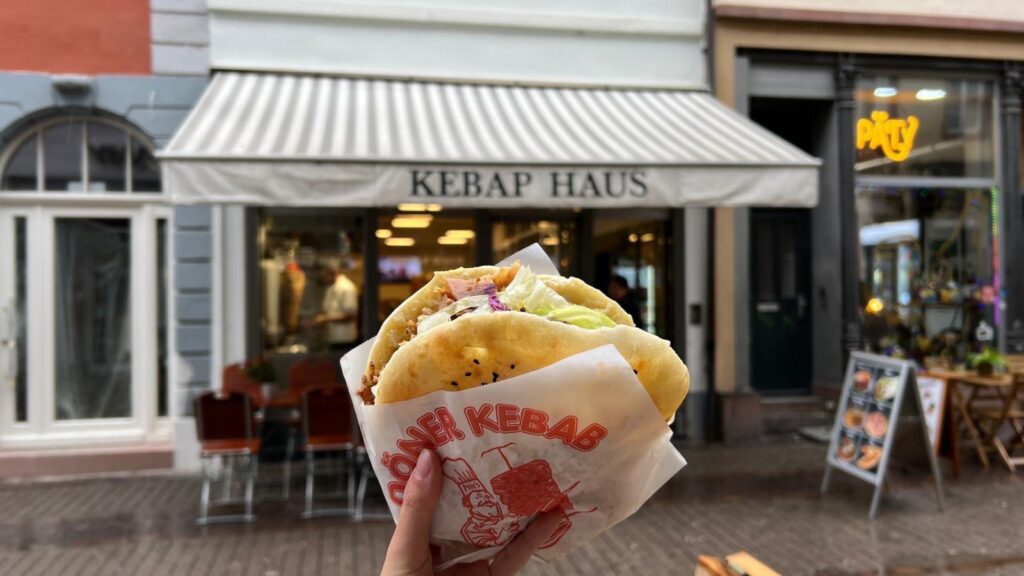
    Photo: Matilda Chan

    Döner kebab may not be the first food that comes to mind when thinking of a typical German dish, and yet, the juicy pide brimmed with tender pieces of spit-roasted meat, fresh veggies, topped with garlic sauce continues to be the country’s most popular fast food in 2022. The business of the tasty handful has become a billion-euro industry in Germany with döner marketed, prepared, and sold in around 18,000 shops across the federal republic. Despite the perceived Turkish delicacy’s proliferation across the globe, the take-away dish marketed in Germany certainly holds a unique appeal. The following article inquires about the transcultural dimensions of the döner, which might be labelled one of Germany’s “typical national dishes,” a notion that in and by itself turns out to be a misconception.

    A transcultural approach to food challenges the idea that culturally defined food practices are bound to territorial, linguistic, or cultural “containers,” but only form through interactions, entanglement, and active negotiation. Such an approach facilitates a more comprehensive understanding of how food traditions develop and change over time and are not actually bound to borders of any kind. By recognising the interconnectedness of food cultures, we gain insights into the dynamic nature of culinary practices, the societies it unites and divides, and the politics in which they are embedded in.

    As with many foods, the origin of döner kebab is not easily traceable. Forms of spit-roasted meats have existed for centuries and are believed to first have emerged in the Ottoman Empire, from which typical national dishes like gyros, alpastor, and shawarma have derived as a result of global cultural flows. This spread has led to a multitude of culinary “contact zones”. However, rather than tracing the origins of cultural facets like foods, a transcultural perspective focuses on these multiple messy and entangled processes that have historically shaped and continue to alter the ideas, practices, and meanings around them. In fact, a quest for the origin or purity of a dish is neither a productive undertaking nor even aproposition in the realms of possibilities considering transcultural studies’ understanding of cultures, practices, and ideas not as fixed entities but products of interaction in themselves.

    The döner as it is known in many German Döner shops was constructed at a Turkish snack bar at the Bahnhof Zoo in Berlin in 1975. Following the economic recession in the early 1970s that left many unemployed, a great number of Turkish immigrants decided to open businesses in the food sector to make a living, eventually leading German-Turks in Kreuzberg to create today’s distinctive staple fast food. Yet, while the döner kebab in Turkey was usually served on a plate in certain restaurants and was only later modified into an on-the-go dish served in a sandwich with pickles and ketchup, serving the döner in a pide and filling it with the krauts, onion, salad, and garlic sauce was new. Therefore, although often considered an ‘authentic’ Turkish dish brought to Germany by labour migrants, the new döner was not the product of a simple transfer. Rather, the alterations of the döner should be seen as an active negotiation with the new local context, transforming and retaining certain aspects of the home cuisine to appeal to a largely German palate and make a living in West Berlin. The döner therefore may be considered transformed as a result of the geographical relocation and transcultural interactions much like its inventors themselves.

    The pide, the bread döner kebab is served in today, has similarly undergone a process of transculturation. In Turkey, this special Turkish flatbread is usually only being prepared and eaten during Ramadan. Yet, the pide proved practical to hold the amount of various filling considered appropriate for German customers and easy to consume due to its round shape and surface. As the new centrepiece of the adapted version of the döner in Germany, pide was soon not only produced once a year but all year around. The inflationary production soon led to the loss of the bread’s religious significance and its connection to the Islamic fast month for Turkish migrants. As a result, a new form of pide, ramazan pidesi, was introduced by local Turkish bakeries which substituted the pide with a slightly adapted version that was only available during Ramadan. Commodified out of practicality and entrepreneurial spirit to construct the döner they saw fit to cater to a German market, the emergence of the ramazan pidesi may be seen as a reclamation of a Turkish identity marker.

    Further, the German-Turkish business owners were not solely selling a hybridised dish but constructed an “exotic experience,” for which there was a large demand in post-war Germany. This aesthetics concerned the outline of the store as well as the visual, auditory, and sensory presentation and marketing and included the employment of “‘folkloric discourse of Turkishness’… [that] drew heavily on orientalist images” (see Möhring 2011), Turkish souvenirs, posters, and coloured lighting. Rather than appropriating these associations, Turkish immigrants who opened döner businesses catered to their customer base’s demands just as business owners in other food sectors did. They profited from the oriental image because it was selling well.

    Through self-employment liberated from oppressive contracts, Turkish businessmen therefore played an active role in the configuration of their product as much as the dominant society in Germany played one in accepting the new dish. And yet, since food is so closely related to identity, the döner has always been highly politicised. Quite ironically, despite its hybrid nature and diasporic and transformative proliferation into almost every part of the world, the dish has been instrumentalized within the national borders of Germany for two diagonally opposing nationalist agendas: it is used both as an allegory of successful integration of Turkish immigrants in Germany and as a racist personification for the Turkish ‘Other’ within Germany. Both often entail either a deliberate consumption or refusal of the fast-food item as a stance on one’s own views on asylum politics.

    A transcultural perspective on typical national dish[es] indicates the necessity of deconstructing both the ‘typical’ and the ‘national’ of a dish: while there are certainly specific foodways within set boundaries, the notion of ‘typical’ suggests a distinctive, stable, and fixed nature of eating which disregards Germany’s heterogeneous population and concomitant versatile cuisines and food preferences. Lindner et al. further detect a hierarchical sentiment within the logics of nationstates, which imposes a “desired ‘national standard’ at the top and the ‘lower’, less desirable cultural forms subject to marginalization”. Labelling a dish as ‘national’ implies it is authentic to a specific culture, but this notion is often an illusion tied to preserving nationalist ideology. In reality, all dishes have evolved through cultural exchanges.

    Since cultures are constantly in motion as a result of the agency of individuals and groups, the prevalent fashion of how döner is both prepared and consumed continuously migrates and takes on new innovative forms and meanings. Examples are the Glasgow-based fast food franchise German Doner Kebab, which advertises its product as “[m]aintaining the authenticity and originality” and runs branches in Europe, North America, and the Middle East, the döner’s appearance in popular culture in form of song lyrics and fashion logos, or the Berlin-based Hotel Adlon’s 27 Euro spin called „türkische[r] Klassiker,“ garnished with a high-end truffle sauce. And while this article has shown that the döner is neither authentically Turkish nor German and prompts the question what ‘authenticity’ or ‘originality’ actually stands for other than a selling point – it is in any way ‘authentically’ transcultural.


    Resources:

    1. Abu-Er-Rub, Laila, Susan Richter, Christiane Brosius, Sebastian Meurer, and Diamantis Panagiotopoulos, eds. 2019. “Introduction: Engaging Transculturality.” In Engaging Transculturality: Concepts, Key Terms, Case Studies, xxiii–xxxix. London: Taylor & Francis.
    2. Amideo, Emilio. 2022. “Language, Memory, and Affect in Diasporic Food Discourse: Austin Clarke’s Barbadian Culinary Memoir”. The Journal of Transcultural Studies 12, no. 1: 63–80.
    3. Belasco, Warren. 2008. Food: The Key Concepts. New York: Berg.
    4. Çağlar, Ayşe Ş. 1998. “McDöner: Dönerkebab Und Der Kampf Der Deutsch-Türken Um Soziale Stellung.” Sociologus 48 (1): 17–41.
    5. German Döner Kebab, “About Us.” Accessed January 09, 2023.
    6. Işın, Priscilla Mary. 2018. Bountiful Empire: A History of Ottoman Cuisine. London: Reaktion Books.
    7. Kremezi, Aglaia, and Anissa Helou. 2010. “What’s in the Name of a Dish? The Words Mean What the People in the Mediterranean Want Them to Mean.” In Food and Language: Proceedings of the Oxford Symposium on Food and Cooking, edited by Oxford Symposium, 203–5. Prospect Books.
    8. Lindner, Ulrike, Maren Möhring, Mark Stein, and Silke Stroh, eds. 2011. Döner Kebab and West German Consumer (Multi-)Cultures. Hybrid Cultures, Nervous States: Britain and Germany in a (Post)Colonial World. Amsterdam: Rodopi.
    9. Maack, Benjamin. 2022. “Zehn-Euro-Döner: Müssen Wir Uns Jetzt an Die Hohen Preise Gewöhnen, Herr Seidel?” Der Spiegel, November 10, 2022.
    10. Möhring, Maren. 2010. “Döner Kebab and West German Consumer (Multi-) Cultures.” In Hybrid Cultures, Nervous States: Britain and Germany in a (Post)Colonial World, edited by Ulrike Lindner, Maren Möhring, Mark Stein, and Silke Stroh, 151–165. Amsterdam: Rodopi.
    11. Ranta, Ronald. 2015. “Food and Nationalism: From Foie Gras to Hummus.” World Policy Journal 32, no. 3: 33–40.
    12. Seidel, Eberhard. 2022. “Türkisch-Deutsche Kulturgeschichte: Die Vermessung des Döners.” Taz.de, February 26, 2022.
    13. Stockhammer, Philip W., Bogdan Athanassov, and Maria Ivanova, eds. 2018. “Introduction: Social Dimensions of Food.” In Social Dimensions of Food in the Prehistoric Balkans, VII-XVII. Oxford; Philadelphia
    14. Tufan, Eylül. 2020. „Gastarbeiter“: Bir Tanımlama Üzerine Çıkarımlar ve Sınırları.” Schwetzinger Migrationsgeschichte(N) (blog). December 4, 2020.
  • #Memory: “Not Our War!” India’s Collective National Amnesia of the Second World War

    #Memory: “Not Our War!” India’s Collective National Amnesia of the Second World War

    “Though I did not then understand the gravity of the war, the faded looks of young widows touched my tiny heart. It was indeed the epitome of Indian soldiers’ contribution in [the war].”

    The above quote came from the Indian historian and author Uma Prasad Thapliyal, who described his experience in 1946 of witnessing the faded tones on the glittering sarees of those Indian widows who had lost their husbands during the Second World War. These deaths represented one example of the more than eighty-seven thousand casualties the country had suffered in the fight against the Axis Powers. India was responsible for providing the war effort with the single largest volunteer force in world history [1] – at over two and a half million strong. Yet, contrary to post-war patterns of “national narcissism” examined by Roediger et al [2], the Second World War occupies a significantly mitigated place in the Indian imagination than in Europe, as well as in Asian nations China and Japan [3]. This article will take a transnational approach to the (lack of) memory of the war in South Asia – owing to the unified nature of the Indian and Pakistani militaries at the time – and examine a paradigm shift in recent decades.

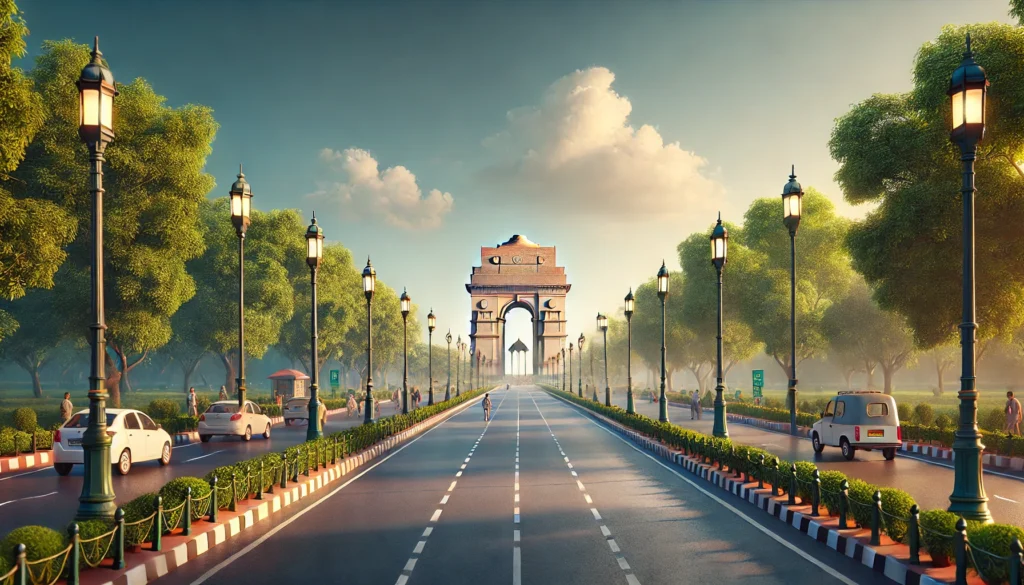
    If one were to examine the National Council of Education Research and Training (NCERT) History books for the 9th, 10th, 11th and 12th grades, one would notice that the Second World War is discussed as if it were a supplementary rather than distinct event to those on the domestic stage. Where there is explicit mention, such as in the third chapter of the 9th-grade edition (Nazism & the Rise of Hitler), acknowledgement of Indian involvement is mainly limited to Gandhi’s famed correspondence with the chancellor himself. In each of these cases, what is largely absent is India’s military contribution to the war effort. The circumstances of India’s ambivalence of wartime memories are perhaps best exemplified by the India Gate monument in New Delhi. Paul McGarr, an associate professor at the University of Nottingham, points to the peculiar history of the gate as a memorial to the fallen soldiers of World War I flanked by a statue of King George V. Thirty years after the statue’s initial installation in 1936, it was defaced by members of the Samyukta Socialist Party (United Socialist Party), who had also left a photo of Indian National Army (INA) leader and Japanese ally Subhas Chandra Bose at the pedestal [4]. Bose, who had fought against Indian state forces, is emblematic of the localised conflict that continues to problematise the memory politics of the Second World War. This contention about India’s wartime history only became more complicated when, in 2022, Indian Prime Minister Narendra Modi inaugurated a statue commemorating Bose where King George V had once stood.

    It merits mentioning that India was not a nation-state at the time of the war but rather a composite facet of an empire. Though primarily discussing the First World War, Thierry di Costanzo, a lecturer at the University of Strasbourg, emphasises the effects of this self-perception on postcolonial interpretations of the war in India. Chief among these was the prominence of concurrent events, i.e. the colony’s independence and partitioning into India and Pakistan [5]. In the aftermath of events such as the Quit India Movement from 1942 to 1944 and the practice of Satyagraha, the war became a backdrop to the far more immediate issue of a potential British exit. These protests also instigated a series of violent crackdowns by the colonial government, which had entered India into the war only some years earlier without consulting local political stakeholders [6]. Activism in the aftermath of this decision varied considerably, thereby germinating another significant factor that continues to affect memories of the war – political heterogeneity.

    While Jawaharlal Nehru’s Indian National Congress party opposed India’s forced entry into the war, party members and political activists continued to express their stance against fascism [7]. This contradictory outlook had been mainly moulded by a series of unkept promises following the last global conflict that India had been forced into by the colonial government, as well as events such as the Jalianwala Bagh Massacre of 1919 that had only exacerbated the divide between the populace and the government of the viceroyalty [8]. To groups such as the opposition All India Muslim League, the fact that its ethnoreligious base constituted large parts of the military gave it a bargaining chip in its quest for Muslim separatism [9]. On the other hand, for many Indians, Bose and his alliance with the supposed enemy was an entirely viable path to freedom from colonisation. Congress itself derived much of its ideological fervour from Japan’s slogan of “Asia for Asians” as early as 1905. Even the British government was aware of the general support for the INA outside the heartlands of the Northwest Frontier and Punjab, with even pessimistic outlooks on the group, seeing them as “misguided patriots” [10].

    Though Bose and his compatriots found themselves posthumously rehabilitated in mainstream Indian politics, other material issues continued to haunt the Indian memory of the war – particularly the Bengal Famine. While the famine had various initial causes, the blight was further exacerbated by the colonial government’s strategic and tactical decisions to destroy supply lines and prioritise food allocation to British citizens and military personnel, leading to the death of over three million people the same year and continued perils due to disease and malnutrition well into 1944. The apathy of the British government, notably Prime Minister Winston Churchill, greatly affected Indian perceptions of the war as a moral fight against fascism. Even the British Secretary of State, Leo Amery, was forced to describe Churchill’s attitude towards the Indians as “Hitler-like” [11]. Some former combatants, such as Lieutenant General Jack Farj Rafael Jacob, did, however, express ideological, personal motivations for joining the war effort [12]. Nevertheless, for most Indians, the perceived expendability of the local population during the Bengal Famine and violent wartime suppression made the war less of an ideological struggle than a praxis of commonplace political obligation for self-preservation and the prevention of anarchy [13].

    By the time Nehru met American President Dwight D. Eisenhower in 1956, the two had very different experiences over a decade prior. When Eisenhower led the charge on D-Day in 1944, Nehru was still languishing in prison for his opposition to the colonial government’s unilateral decision to enter the war [14]. The release of Nehru and other Congress leaders in 1945 initiated what military historian Rana Tej Singh Chhina describes as the forfeiture of India’s involvement by certain sections of the political establishment who decried it as “not our war” [15]. This background and the political polarisation Nehru had witnessed informed India’s postwar policy of non-alignment and neutrality [16], thereby mitigating the need for the post-war memory politics that continued to permeate parts of Europe in the face of a communist threat [17]. The need for measures to preserve secondary memory about the war through textual and visual means was, therefore, not an ideological priority for a postcolonial India.

    Returning to the India Gate monument, which was renovated through the development of the National War Memorial in 2019, the subsequent spatial domination of post-partition narratives saw the continued withering of the pre-independence war corpus as the Indian military sought to be reimagined as a national institution. This process, Bayly claimed, had already begun by the end of the Second World War. Regional engagements such as the sporadic Indo-Pak Wars between 1948 and 1971 worked to ideologically separate and entrench two parts of a military that had, until a few years prior, been facets of the same colonial force. Likewise, defensive wars against China and the invasion of Goa worked to repaint the postcolonial Indian military as an institution that served the national interest. Combined with the traumas of partition and the subsequent migration crisis, this significantly diminished the cultural relevance of primary memories of pre-independence conflicts [18].

    However, some issues remain with this unofficial omission within India’s military history – particularly in foreign policy. Suvir Kaul, referencing Indian journalist Dr. C. Raj Mohan, discusses the potential for India’s recurring tendency to fall into the machinations of imperialism, particularly in pursuit of regional interests and rapprochement by the United States following the liberalisation of the 1990s [19]. On the other hand, to China, integrating India’s pre-independence military history into a global narrative of the fight against fascism would benefit its national interest [20]. The idea of official state visits to sites commemorating the war is not unheard of; more recent acts of remembrance, such as President Dr. A. P. J. Abdul Kalam’s visit to the Phaleron War Cemetery in 2007 or Prime Minister Narendra Modi’s visit to the Australian War Memorial in 2014 and Piskariovskoye Memorial Cemetery in 2017 seem to indicate such desires to engage in memory politics for contemporary purposes [21]. To scholars such as Bayly, the prospect of engaging with memories of the war presents an opportunity to understand the political, social and economic change in India that led to more profound insights into Indian nationalism, socialism, and the ideology of rights via the phenomenon of “democratisation through practice” that emerged during the war effort [22]. While India’s collective wartime memory has been subject to a tumultuous series of contradictory interjections, there indeed remain benefits to a critical reevaluation of said history.

    Footnotes

    [1] Arvind Gupta et al, “Contribution of the Indian Armed Forces to the Second World War: Book Release and Panel Discussion,” n.d, 34-36.

    [2] Henry L. Roediger et al., “Competing National Memories of World War II,” Proceedings of the National Academy of Sciences 116, no. 34 (August 20, 2019): pp. 16678-16686, https://doi.org/10.1073/pnas.1907992116, 16683.

    [3] Thierry Di Costanzo, “Memory and History of the Great(Er) War and India: From a National-Imperial to a More Global Perspective,” E-Rea, no. 14.2 (June 15, 2017): pp.1-18, https://doi.org/10.4000/erea.5844, 5.

    [4] Paul M. McGarr, “‘The Viceroys Are Disappearing from the Roundabouts in Delhi’: British Symbols of Power in Post-Colonial India,” Modern Asian Studies 49, no. 3 (2015): pp. 787-831, https://doi.org/10.1017/s0026749x14000080, 788.

    [5] Thierry Di Costanzo, “Memory and History of the Great(Er) War and India: From a National-Imperial to a More Global Perspective,” E-Rea, no. 14.2 (June 15, 2017): pp.1-18, https://doi.org/10.4000/erea.5844, 5.

    [6] Moazzam Wasti, Muhammad I. Chawla, and Farzana Arshad, “Lord Linlithgow and Muslim Politics in India: An Overview,” Journal of the Research Society of Pakistan 55, no. 1 (2018): pp. 143-155, 146.

    [7] Gupta et al, “Contribution of the Indian Armed Forces to the Second World War”, 12.

    [8] C. A. Bayly, “’The Nation within’: British India at War 1939–1947,” Proceedings of the British Academy 125 (2004): pp. 265-285, https://doi.org/10.5871/bacad/9780197263242.003.0011, 275.

    [9] Wasti, “Lord Linlithgow and Muslim Politics in India: An Overview”, 151.

    [10] Bayly, “’The Nation within’: British India at War 1939–1947”, 267 & 284.

    [11] Bayly, “’The Nation within’: British India at War 1939–1947”, 269-271.

    [12] Gupta et al, “Contribution of the Indian Armed Forces to the Second World War”, 5.

    [13] Bayly, “’The Nation within’: British India at War 1939–1947”, 282-283.

    [14] Bruce O. Riedel, “Ike and India, 1950-60,” in JFK’s Forgotten Crisis: Tibet, the CIA, and Sino-Indian War (Noida, Uttar Pradesh, India: Harper Collins Publishers India, 2016), pp. 7-42, 8.

    [15] Gupta et al, “Contribution of the Indian Armed Forces to the Second World War”, 37.

    [16] Di Costanzo, “Memory and History of the Great(Er) War and India”, 9.

    [17] Anne-Marie Scholz, “The Bridge on the River Kwai (1957) Revisited: Combat Cinema, American Culture and the German Past,” German History 26, no. 2 (January 2008): pp. 219-250, https://doi.org/10.1093/gerhis/ghn004.

    [18] Bayly, “’The Nation within’: British India at War 1939–1947”, 274-279.

    [19] Suvir Kaul, “Indian Empire (and the Case of Kashmir),” Economic and Political Weekly 46, no. 11 (2011): pp. 66-75, https://www.jstor.org/stable/41152287, 69.

    [20] Gupta et al, “Contribution of the Indian Armed Forces to the Second World War”, 37.

    [21] Rana Chhina, Last Post: Indian War Memorials around the World (New Delhi, India: Centre for Armed Forces Historical Research, United Service Institution of India, 2014), 76.

    [22] Bayly, “’The Nation within’: British India at War 1939–1947”, 279.

    Resources

    1. Bayly, C. A. “’The Nation within’: British India at War 1939–1947.” Proceedings of the British Academy 125 (2004): 265–85. https://doi.org/10.5871/bacad/9780197263242.003.0011.
    2. Chhina, Rana. Last Post: Indian War Memorials around the World. New Delhi, India: Centre for Armed Forces Historical Research, United Service Institution of India, 2014. https://www.mea.gov.in/Uploads/PublicationDocs/23460_IWM_Book__11-06-2014_.pd. Print.
    3. Costanzo, Thierry Di. “Memory and History of the Great(Er) War and India: From a National-Imperial to a More Global Perspective.” E-rea, no. 14.2 (June 15, 2017): 1–18. https://doi.org/10.4000/erea.5844.
    4. Gupta, Arvind, Jack F. R. Jacob, Satish Nambiar, Uday Prakash Thapliyal, and Rattan T. S. Chhina. “Institute for Defence Studies and Analyses,” January 2013. https://idsa.in/system/files/IndiaWorldWarII.pdf.
    5. Kaul, Suvir. “Indian Empire (and the Case of Kashmir).” Economic and Political Weekly 46, no. 11 (2011): 66–75. https://www.jstor.org/stable/41152287. Print.
    6. McGarr, Paul M. “‘The Viceroys Are Disappearing from the Roundabouts in Delhi’: British Symbols of Power in Post-Colonial India.” Modern Asian Studies 49, no. 3 (2015): 787–831. https://doi.org/10.1017/s0026749x14000080.
    7. Riedel, Bruce O., and Bruce O. Riedel. “Ike and India, 1950-60.” Essay. In JFK’s Forgotten Crisis: Tibet, the CIA, and Sino-Indian War, 7–42. Noida, Uttar Pradesh, India: Harper Collins Publishers India, 2016. ISBN: 9780815727019. Print.
    8. Roediger, Henry L., Magdalena Abel, Sharda Umanath, Ruth A. Shaffer, Beth Fairfield, Masanobu Takahashi, and James V. Wertsch. “Competing National Memories of World War II.” Proceedings of the National Academy of Sciences 116, no. 34 (August 20, 2019): 16678–86. https://doi.org/10.1073/pnas.1907992116.
    9. Wasti, Moazzam, Muhammad I. Chawla, and Farzana Arshad. “Lord Linlithgow and Muslim Politics in India: An Overview.” Journal of the Research Society of Pakistan 55, no. 1 (2018): 143–55. http://pu.edu.pk/images/journal/history/PDF-FILES/10a_55_1_18.pdf.
  • #Agency: The Use of “Regierung” in Germany: A Linguistic Deception with Profound Implications

    #Agency: The Use of “Regierung” in Germany: A Linguistic Deception with Profound Implications

    How does language influence our perception and assessment of power and relations?

    Have you ever thought of why you use a certain word in a certain context? Have you ever thought of what information this word entails and what it conceals? Let me show you one example, where looking into semantics actually matters, shaping how you feel within society.

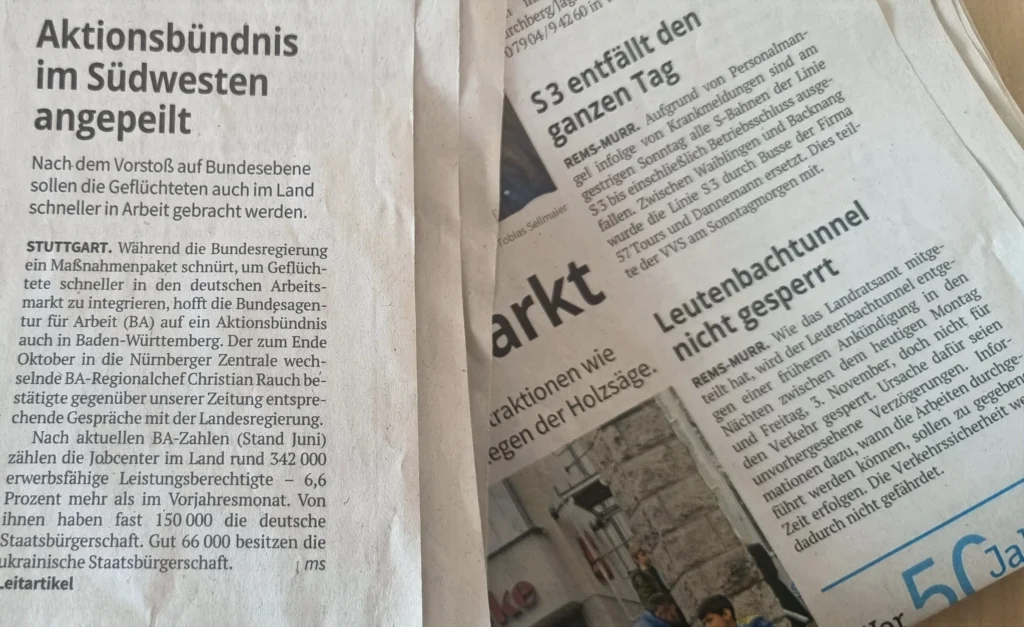
    In Germany, the term “Regierung” (government) is commonly used to refer to the decision-makers and political actors who govern a country. However, behind this seemingly neutral term lies a linguistic deception that obscures the actual power structure. The use of the term “Regierung” masks the agency of those in power and distorts reality. A closer examination of the origin of this term reveals that it is not actually used in accordance to prevailing grammar rules: The word “Regierung” is derived from the verb “regieren” (to govern), which comes from the Latin word “regere.” Grammatically, “Regierung” is the noun form of the action of governing. It describes the process of ruling, rather than the actors themselves. By using the word “Regierung,” we imply the existence of an abstract entity that exists independently of the individuals who actually govern.

    This linguistic obfuscation has far-reaching implications for our perception and evaluation of political power. By speaking of the “Regierung,” we perceive the decision-makers as a homogeneous group and neglect their individual responsibility and agency. It becomes easy to accept the decisions of those in power as inevitable outcomes of an anonymous institution, rather than viewing them as the result of conscious individual choices.

    Imagine if, instead of using “Regierung,” we read about “regierende Personen” (ruling individuals) in the media. This term emphasizes the agency and individual actors who have the power of making governmental decisions. Even the use of words that highlight more agency, such as “Politiker” (politician), mainly focuses on the occupation and actions of the person as a policy-maker, not the distinction in power between ruling and ruled. “Die Regierenden” (the rulers) reminds us that these decisions are made by people who are accountable and responsible for their actions. And it implies that if there are “the ruling people”, then there must also be “the ruled ones”.

    Picture yourself reading the news – How would you feel being grouped into either the ruling or the ruled group? Of course, within democracies a certain power is given to the individual, but if we were to be reminded all the time, that we are not part of the decision-makers – would that change your perception of the policies? By using more precise language, we can better understand the complexity of political processes and make more accurate assessments of those in power.

    The concept of agency is particularly relevant here. Agency refers to the ability of individuals to act, make decisions, and take responsibility for their actions. By using the term “Regierung,” the individual agency of political actors is obscured and their role in political decision-making processes is made invisible. By obscuring the agency of those in power, we deprive ourselves of the ability to perceive them as independent actors and to pass judgement on their actions.

    Language not only shapes our thoughts but also our reality. The words we use influence how we perceive and assess the world around us. By concealing the individual agency of those in power, we impair our understanding of political power structures and our ability to demand accountability.

    It is important to note that the concealment of agency is not limited to the German language alone. In many other languages, similar terms are used that obscure the individual agency of political decision-makers. For example, in English, the term “government” is often used, which, like “Regierung” in German, focuses on the institution and relegates the individual agency of decision-makers to the background. Similar linguistic phenomena exist in other cultures and languages as well. The recognition and exploration of these linguistic and cultural constructions contribute to the field of Transcultural Studies, which investigates the interplay between language, culture, and power structures. By analyzing the significance of language and culture in political processes, Transcultural Studies help expose existing power structures and develop alternative narratives.

    Recognizing the individual agency of those in power is crucial in fostering a critical attitude toward political power. By using language more consciously and emphasizing the individual agency of political actors, we can achieve a more nuanced and differentiated understanding of political processes. Precise language enables us to demand accountability and critically question political decisions.

    Did you think of a word in your language that is not used correctly while reading? What does it entail and what does it conceal? Why is it being used wrongly in this specific context? Would your perception of the agency of people change if the word would be replaced? Perhaps it’s time to reconsider the use of some linguistic terms to become more aware of the agencies that are otherwise not being acknowledged.

    Resources:

    1. Friedrich Kluge (Begr.), Elmar Seebold: Etymologisches Wörterbuch der deutschen Sprache. 24. Auflage. Walter de Gruyter, Berlin 2002, ISBN 3-11-017473-1.
    2. Carl Ratner: Agency and Culture. Journal of the Theory of Social Behaviour. Blackwell Publishers, Oxford 2001. https://doi.org/10.1111/1468-5914.00138.